
Scoliosis & Deformity Correction Surgery
Scoliosis Deformity Correction Surgery: Quick Facts
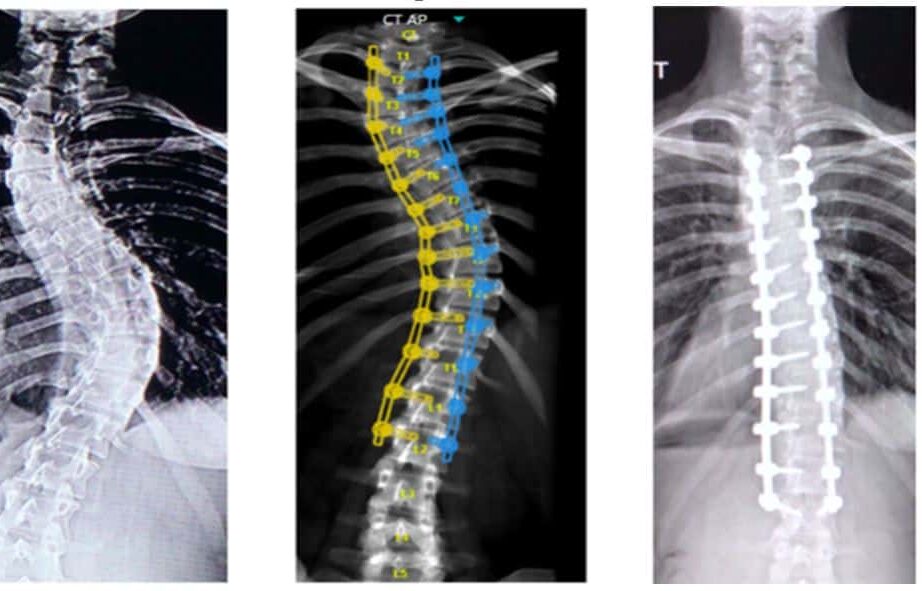
- Scoliosis deformity correction is a specialized surgical procedure designed to straighten and stabilize an abnormal curvature of the spine while improving spinal alignment, balance, and overall function. It is typically recommended when scoliosis is severe, progressive, or causing significant symptoms.
- The procedure may be performed for adolescent or adult scoliosis, kyphosis, or other complex spinal deformities that cause chronic pain, nerve compression, difficulty standing upright, or impaired breathing and mobility.
- Surgical correction often involves realigning the spine using rods, screws, and other implants. Depending on the patient’s condition, treatment may include spinal fusion, motion-preserving techniques, or other advanced deformity correction procedures.
- Not every patient with scoliosis requires surgery. A comprehensive evaluation, including a physical examination and standing X-rays, helps determine the severity of the curve, spinal balance, and the most appropriate treatment approach.
- Recovery includes early mobilization, physical therapy, and a gradual return to daily activities. Recovery timelines vary depending on the complexity of the deformity and the type of procedure performed.
- For appropriately selected patients, scoliosis deformity correction can reduce pain, improve posture and spinal alignment, restore function, and significantly enhance quality of life.
What is Spinal Reconstruction Surgery?
The goal of spinal reconstruction surgery is to decrease the patient’s pain and to place the spine in a more natural position. This can be accomplished using minimally invasive robot-guided spine surgery which allows our surgeons to precisely create and plan a blueprint for surgery before stepping foot in the operating room.
When correcting a curve or deformity in the spine, we employ minimally invasive techniques and technologies to cause as little disruption as possible to the patient. Surgical tools that we use include robotic guidance, stealth navigation, ultrasonic or laser cutting devices.
Types of Spinal Deformity Surgeries
How to Recognize the Need for Spine Correction Surgery
Scoliosis Treatment for Adults
Adult scoliosis often presents with symptoms such as chronic back pain, noticeable spinal deformity, and a gradual loss of height. These symptoms are frequently caused by the degeneration of spinal discs and joints, leading to an abnormal curvature of the spine. Diagnosis typically involves physical examinations, X-rays, and other imaging techniques to assess the severity and progression of the curve. When conservative treatments like physical therapy and pain management fail to alleviate scoliosis symptoms, scoliosis surgery may be recommended to correct the spinal alignment and relieve nerve compression.
Adolescent Idiopathic Scoliosis Treatment
Adolescent idiopathic scoliosis typically manifests as an abnormal curvature of the spine, often detected during growth spurts in puberty. Common scoliosis symptoms include uneven shoulders, a prominent rib cage, and a visible curve in the back. Diagnosis usually involves physical exams and imaging techniques like X-rays to measure the degree of curvature. When the spinal curve is severe and progressive, scoliosis surgery may be necessary to correct the alignment and prevent further complications.
Kyphosis Treatment
Kyphosis is a normal outward curve of the spine but hyperkyphosis, or an enlarged outward curve, is an abnormal curving of the spine that can occur at any age. This may be a source of underlying back pain or a culprit contributing to an abnormal curvature of the spine.
Flatback Correction Treatment
Flatback syndrome is characterized by a loss of the natural lumbar curve, leading to difficulty standing upright and chronic back pain. Symptoms include fatigue, thigh and back pain, and an imbalanced posture. Diagnosis involves physical exams and imaging tests like X-rays to assess the extent of spinal deformity. When flatback syndrome treatments such as physical therapy and pain management are ineffective, surgical intervention may be necessary to restore proper spinal alignment and improve quality of life.
What are the Benefits of Spinal Deformity Surgery?
Scoliosis and deformity corrective surgeries help to realign the spine in patients with abnormal curvatures, as well as:
- Decreases pain and other symptoms associated with the deformity
- Prevents progression of deformity
- Places the spine in a more natural position
- Decreases numbness and weakness
Is Spine Correction Surgery for you?
Meet with our team of specialized spine doctors to discuss your eligibility for scoliosis surgery, kyphosis surgery, or surgery for flatback syndrome. Let’s discuss the next steps toward obtaining the pain relief you seek.