
Stem Cell Therapy
Harnessing Your Body’s Own Healing Properties
Reviewed by: Dr. Bharara and Dr. Good
Key Takeaways on Stem Cell Therapy
- Stem cell therapy for the spine uses a patient’s own bone marrow to support healing in damaged spinal structures
- The treatment is most commonly used for conditions such as degenerative disc disease and disc-related back pain
- It involves collecting bone marrow, concentrating it, and injecting it into targeted areas using imaging guidance
- The goal is to reduce inflammation and support tissue repair
- Most patients begin to notice improvement within a few months, with continued progress over time
- As with all treatments, a thorough evaluation is necessary to determine which custom treatment is right for you
What Is Stem Cell Therapy for the Spine?
Stem cell therapy is a regenerative medicine treatment that uses cells from a patient’s own body to support healing in damaged or degenerated spinal tissues.
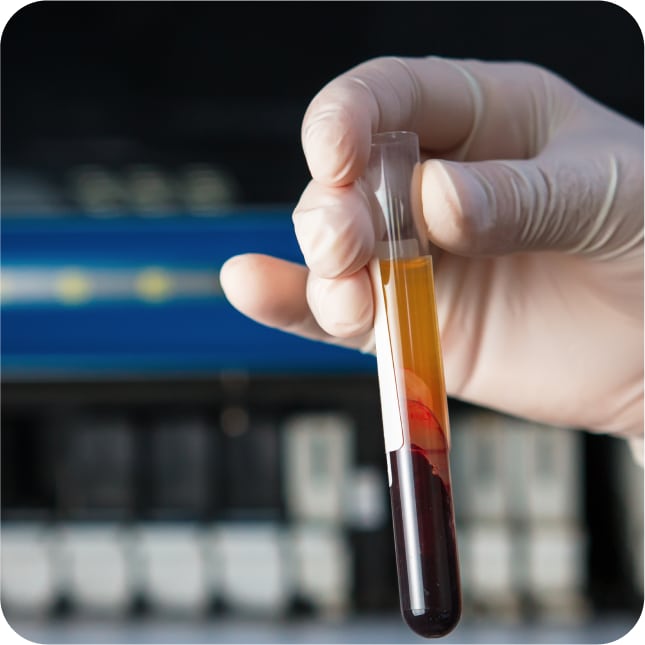
In most cases, this treatment involves bone marrow aspirate concentrate, also known as BMAC (Bone Marrow Aspirate Concentrate). Bone marrow is collected from the iliac crest (hip bone) and processed to concentrate cells, growth factors, and signaling proteins. This concentrated solution is then injected into targeted areas of the spine.
In simpler terms, stem cell therapy uses the body’s own biological materials to help reduce inflammation and support repair in areas that are not healing well on their own.
How does Stem Cell Therapy Work?
Stem cell therapy is designed to improve the environment around damaged spinal structures rather than directly replacing tissue.
The concentrated bone marrow solution contains:
- Cells that can support tissue repair
- Growth factors that help regulate healing
- Signaling proteins that reduce inflammation
When injected into the affected area, these components may help:
- Reduce inflammation within the disc or surrounding structures
- Improve cellular activity in damaged tissue
- Support the body’s natural healing response
This process takes time, and results typically develop gradually.
What Conditions Can Stem Cell Therapy Treat?
Stem cell therapy is most often used for spine conditions involving degeneration or inflammation.
Common conditions include:
- Degenerative disc disease
- Discogenic low back pain
- Annular disc tears
- Mild to moderate disc herniation
- Facet joint pain
The treatment is generally considered for patients with persistent symptoms who have not found relief through conservative care.

Who is a Candidate For Stem Cell Therapy?
Stem cell therapy may be appropriate for patients who:
- Have chronic low back or neck pain linked to disc degeneration
- Have not improved with physical therapy, medication, or other non-surgical treatments
- Are looking to avoid or delay surgery
Each patient is different, and candidacy is determined through a thorough evaluation as well as diagnostic imaging and tests.
What to Expect During the Stem Cell Procedure
Stem cell therapy is performed at VSI’s office as an outpatient procedure. The process includes:
- Bone marrow is collected from the iliac crest (hip bone)
- The sample is processed into a concentrated solution
- The solution is injected into the targeted spinal area using imaging guidance
Image guidance, such as fluoroscopy or ultrasound, is used to ensure precise placement.
The procedure is minimally invasive and typically completed in a single visit.
Stem Cell Therapy Recovery and Results Timeline
While recovery after Stem Cell Therapy is gradual, we have an ecosystem that prioritizes recovery. Our Recovery Revolution™ combines research-based therapies, such as physical therapy and hyperbaric oxygen therapy, to boost your Stem Cell Therapy and help you recover quicker.
- Some patients notice early changes within a few weeks
- Most improvement occurs over two to three months
- Continued progress may occur over several months as healing develops
Stem Cell Therapy vs. Other Treatment Options
Stem cell therapy is one of several options for managing spine-related pain.
|
Treatment |
Primary Goal |
When It Is Used |
|
Stem Cell Therapy |
Support tissue repair and reduce inflammation |
Persistent symptoms without severe structural damage |
|
Uses platelet growth factors |
Mild to moderate conditions |
|
|
Improve strength and mobility |
First-line treatment |
|
|
Reduce inflammation quickly |
Short-term symptom relief |
|
|
Correct structural problems |
Severe or progressive conditions |
The right approach depends on the underlying cause of pain and how the condition responds to earlier treatments
Risks and Considerations of Stem Cell Therapy
Stem cell therapy is generally considered minimally invasive, but like any medical procedure, it carries some risks. For most patients, they experience temporary soreness at the injection site.
We encourage our patients to begin a physical therapy regiment before their procedure and to continue their rehabilitation within a few days of their procedure to help alleviate any soreness from the procedure itself.
When to Consider Stem Cell Therapy
You may want to consider stem cell therapy for your spine condition if:
- Pain persists despite conservative treatment
- Imaging shows disc-related degeneration
- Symptoms are impacting daily function
- You are looking for alternatives to surgery
A comprehensive evaluation is necessary to determine whether this approach is appropriate.
Why Choose VSI for Stem Cell Therapy?
At VSI, we’ve been performing Stem Cell Therapy for over a decade – including intradiscal procedures. Stem Cell Therapy is part of a broader, patient-specific approach to spine care. We focus on:
- Accurate diagnosis to identify the true source of pain
- Careful patient selection to determine candidacy
- Image-guided precision during treatment
- Integration with other therapies when appropriate
Our goal is to provide effective, evidence-informed care tailored to each patient’s condition and goals..
Frequently Asked Questions about Stem Cell Therapy
Speak with our Spine Specialists About Stem Cell Therapy