
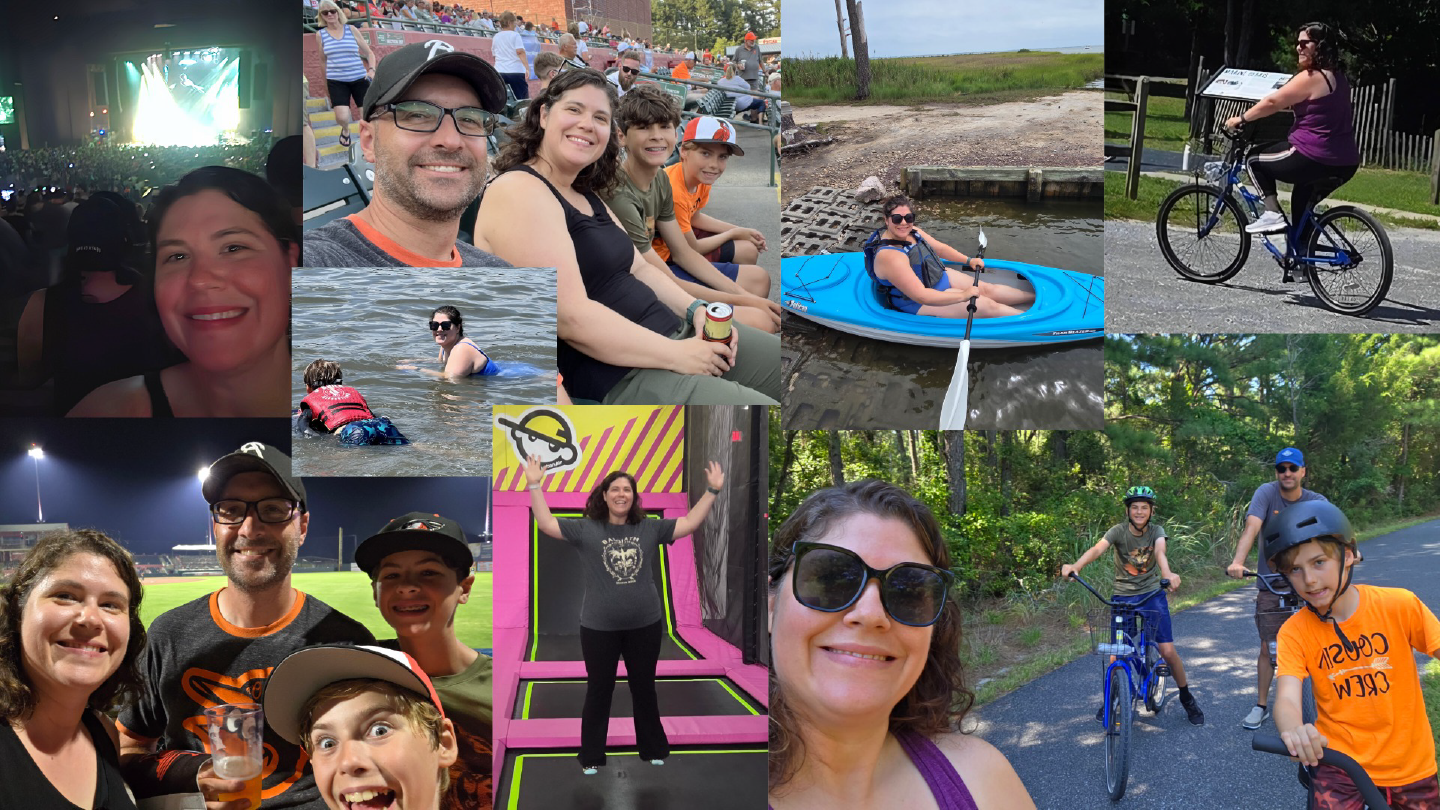
Disc Replacement After Years of Chronic Back Pain: Rachel’s Story
What does chronic back pain really cost? For Rachel, a 35-year-old teacher and mother of two from Maryland, the price was 20 years of her life spent watching from the sidelines. Twenty years of declining invitations, making excuses, and slowly shrinking her world to fit around constant pain.
Her symptoms began as a teenager and followed her into adulthood, shaping everything from how she moved to how she showed up for her family. Along the way, she tried nearly every option offered to her: lumbar fusion, discectomy, injections, chiropractic care, and physical therapy. Some treatments helped temporarily, but the relief never lasted.
Eventually, she was told that her future would likely involve spinal fusion after spinal fusion, each one further limiting her mobility and quality of life.
Rather than accepting that outcome, Rachel kept asking questions.
In this episode of the Get Back to Your Life® podcast, she shares how seeking a second opinion and finding the right surgeon changed everything.
The Hidden Cost of Living with Chronic Back Pain
Rachel’s back pain started at 14, but it took years before anyone took her seriously. As a teenager in the 1990s complaining about back pain, she was dismissed as whining or making excuses to skip gym class.
By the time Rachel had her first child, the disconnect between her experience and what others considered normal became impossible to ignore. She watched her friends effortlessly wear baby carriers and hoist car seats while she had to constantly ask her husband for help with the most basic parenting tasks.
“I just wanted to be like my friends and sit in a trendy stool. I made notes of where I had been different, where my back pain had held me back.”
The pain became her constant companion, dictating every decision. She gave up running despite coming from a family of runners. She stopped making plans that involved travel. She watched her children ride bikes at state parks from the car because she couldn’t participate. Simple tasks like lifting a cast iron skillet or carrying dog food required assistance.
When the Medical System Says No
Eventually, Rachel was told that disc replacement was not an option for her. Instead, she was warned that her future would likely involve consecutive spinal fusion surgeries, each one further limiting her mobility. One conversation in particular left a lasting impression.
“Whenever you do get your fusions, you start the clock on the next one,” Rachel recalled. “And in about five or six years, that one will need to be fused. And over the next 40 or 50 years, we will zip up your spine level by level.”
For someone who valued movement and independence, the thought of progressively fusing her entire spine felt like a prison sentence.
Watch the Podcast on Youtube
The Power of Refusing to Give Up
Rather than accepting this bleak prognosis, Rachel sought another opinion, looking for a surgeon willing to fully evaluate her spine and discuss all available options. That search ultimately led her to VSI®, where she met spine surgeon Dr. Colin Haines.
The thorough evaluation confirmed what Rachel had suspected all along: she was a candidate for artificial disc replacement. For the first time in years, she felt there was a path forward that aligned with her goals for movement and quality of life. In March, she underwent two-level disc replacement surgery with Dr. Haines.
What Recovery Looked Like for Rachel
Rachel’s recovery did not revolve around a single dramatic moment. Instead, improvement showed up gradually in ways that mattered deeply to her. She began sleeping through the night. Long car rides no longer filled her with dread. She could sit comfortably, travel without fear, and take part in activities she had quietly stepped away from over the years.
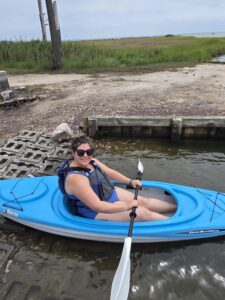
At her two-month post-surgery mark, Rachel created a bucket list of activities she wanted Dr. Haines to approve. She went through each item individually. After about twelve items, Dr. Haines finally told her she could do everything on her list.
“I said, ‘I want to go kayaking,’” Rachel shared. “He was like, ‘you can do whatever you want.’ And after I got through the list, he said, ‘Rachel, actually all of the things, you can do them. Like no problem.’”
That moment marked a shift. Activities that once felt out of reach became possible again.
The Bucket List That Seemed Impossible
After years of sitting out, Rachel started saying yes again. She has since attended three concerts since surgery, including seeing her favorite band that had broken up for 15 years and reunited for just five shows. She drove through a monsoon and stood in the rain to see them perform, something that would have required days of recovery before her surgery.
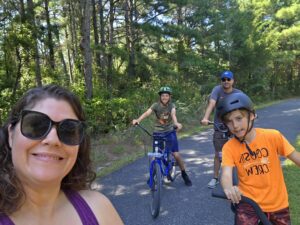
She ran a turkey trot with her kids, who were shocked at how fast she was. She rode bikes with them up a hill at a state park, and they didn’t even know she could ride a bike.
“My kids were just like, I didn’t know you knew how to ride a bike, mom.” I was like, “Please, I’m a nineties girl. I know how to ride a bike. My whole childhood was on a bike.”
A Message for Others Living with Chronic Back Pain
Rachel’s experience speaks to something many patients feel: that living with chronic back pain is ‘normal’, that accepting limitations is the mature response, that seeking additional opinions is being difficult or demanding.
Rachel’s story is not about pushing through pain or ignoring limitations. It is about persistence, asking better questions, and seeking care that takes the whole picture into account.
Rachel wishes she had pursued treatment ten years earlier, when her children were younger. But she’s grateful she didn’t wait another decade. Every year spent adapting to chronic pain is time that can never be recovered.
If you are living with chronic back pain, have had previous spine surgery, or are wondering whether disc replacement could still be an option for you, Rachel’s story offers an important reminder: Being told “no” does not always mean the story is over. With the right evaluation and the right medical team, more options may exist than you realize.
Questions to Ask Your Spine Surgeon
Rachel’s experience offers valuable guidance for anyone facing similar decisions about spinal treatment:
- Do your research before appointments
- Ask why a treatment isn’t appropriate for you and what factors determine candidacy
- Request a full evaluation that reviews imaging and prior procedures
- Consider a second opinion, especially if you feel dismissed or rushed into one option
- Be clear about your goals for movement and daily life
Rachel’s story is a reminder that sometimes the best medical outcomes start with a patient who refuses to accept limitations without thorough investigation.
Topics covered
About the Author
Featured Resources
Insights to Achieve a Pain-Free Life