
Radiofrequency Ablation (RFA)
Radiofrequency Ablation (RFA): Quick Facts
- Radiofrequency ablation (RFA) is a minimally invasive procedure that uses heat generated by radiofrequency energy to interrupt pain signals from specific nerves, providing long-lasting relief from chronic pain.
- RFA is most commonly used to treat chronic neck and lower back pain caused by facet joint arthritis, sacroiliac (SI) joint dysfunction, or other joint-related spine conditions that have not responded to conservative treatment.
- Before RFA is recommended, patients typically undergo one or more diagnostic nerve block injections to confirm that the targeted nerve is the source of their pain.
- The procedure is performed using X-ray guidance to precisely position a small needle near the affected nerve. Radiofrequency energy is then used to heat the nerve, reducing its ability to transmit pain signals while preserving surrounding healthy tissue.
- RFA is an outpatient procedure that requires little downtime. Many patients experience pain relief lasting six months to a year or longer, although nerves may gradually regenerate over time and the procedure can often be repeated if needed.
- Radiofrequency ablation is often recommended as part of a comprehensive pain management plan that may also include physical therapy, medications, and other nonsurgical treatments to improve function and quality of life.
Radiofrequency Ablation (RFA) for Chronic Pain Relief
Radiofrequency ablation (RFA) is a minimally invasive procedure that targets specific nerves to interrupt pain signals and provide longer-lasting relief from chronic pain. It is often used to treat nerve pain from radicular pain, neuropathy-related pain, migraines and headaches, and back pain.
What Is RFA?
Radiofrequency ablation uses controlled radio waves to heat (“burn”) tiny portions of nerve tissue that are carrying pain signals from a painful area of your body to your spinal cord and brain. By carefully disrupting these pain pathways, RFA can significantly reduce or even eliminate chronic pain coming from many common pain generators in the spine and joints.
In some cases, directly treating the source of pain with surgery may not be in a patient’s best interest due to the invasiveness of the procedure, higher risks, or other health concerns. For these patients, RFA provides a targeted, minimally invasive way to address chronic pain and improve daily function without traditional spine surgery.
Other Names for RFA
You may also hear this procedure called:
- Radiofrequency ablation
- Nerve ablation
- Ablation
- Nerve burning
What Are the Benefits of RFA?
Radiofrequency ablation offers many advantages compared to more traditional pain treatments such as steroid injections or nerve blocks:
- Longer-lasting pain relief than standard injections or nerve blocks
- Minimally invasive, with no large incisions
- Short procedure time, typically 10–20 minutes depending on the number and location of nerves treated
- Faster recovery time than surgery
- Can be repeated if pain returns
- Can make physical therapy more effective by reducing pain and allowing you to move better
While results vary, many patients experience pain relief that can last months at a time, allowing them to return more fully to the activities they enjoy.
What Conditions Does RFA Treat?
Any nerve that can be clearly identified as a major pain generator can potentially be treated with RFA. Depending on the location of your pain and your diagnostic test results, RFA may be used to help with:
- Neck pain
- Back pain
- Migraines and headaches
- Shoulder pain
- Hip pain
- Knee pain
- Radicular pain (pain radiating down an arm or leg)
- Neuropathy-related pain
Your VSI provider will use a combination of your medical history, physical exam, imaging, and diagnostic injections to determine whether RFA is appropriate for your specific condition.
Ready to see if Radiofrequency Ablation is Right for You?
What to Expect During an RFA Session
Knowing what will happen during your RFA procedure can help you feel more comfortable and prepared. The first part of the procedure will feel very similar to the diagnostic injections you may have had before. Here is what typically happens during an RFA session:
- You are positioned comfortably on the procedure table.
- The skin over the treatment area is cleaned and prepared using sterile technique.
- A local anesthetic is injected to numb the skin and deeper tissues.
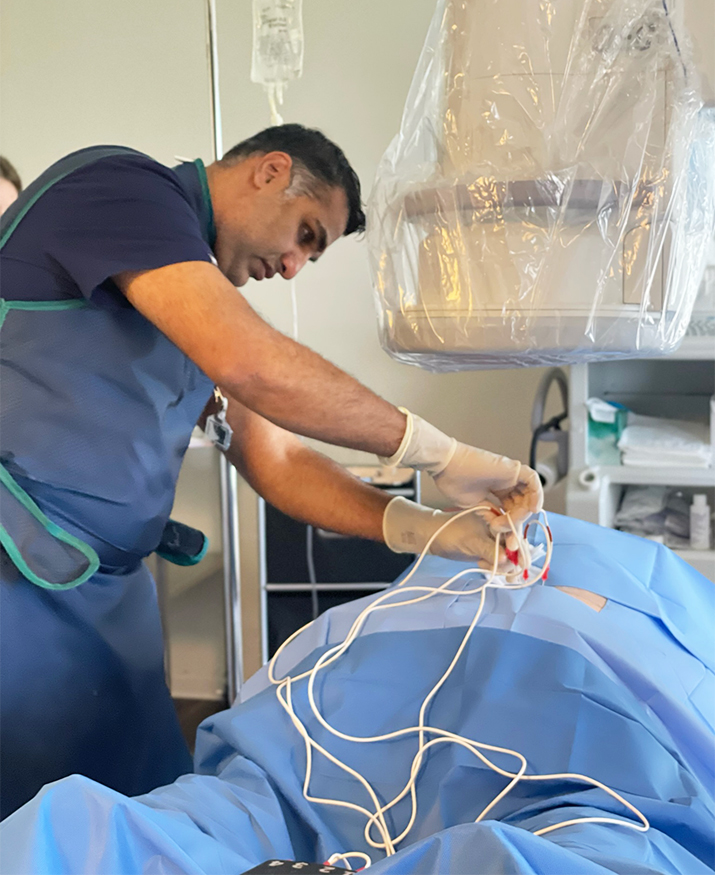
- Using real-time fluoroscopic (X-ray) guidance, a thin needle (cannula) is carefully directed to the target nerve.
- A solution containing anesthetic and sometimes steroid is injected around the nerve to numb it and keep you comfortable during the ablation.
- A small radiofrequency probe is threaded through the cannula until it reaches the target nerve.
- Radio waves heat the tip of the probe, which precisely ablates (disrupts) the nerve, preventing it from sending pain signals.
- The probes and needles are removed, and the area is cleaned and covered with small bandages.
Depending on how many nerves are treated and where they are located, the entire RFA procedure usually takes about 10–20 minutes.
Sedation and Comfort
RFA can be performed with different levels of comfort support depending on your needs and health status:
- IV conscious sedation
- Oral sedation
- Using only local numbing medicine
Your provider will discuss these options with you and recommend the safest and most comfortable choice.
Recovery and Return to Activity
Most patients can return to light activities and work as tolerated very quickly after RFA, often the same day. Many patients choose to have the procedure done on a Friday so they can use the weekend to rest and recover from any temporary soreness. You may notice:
- Mild bruising or soreness at the injection sites for a few days
- A short-lived increase (“flare”) in your usual pain before it begins to improve
- Over-the-counter pain medication (as directed by your provider) and ice packs usually help manage post-procedure discomfort.
- Pain relief from RFA typically develops gradually. Many patients begin to notice improvement within 2–3 weeks, with full effect often reached between 3–6 weeks after the procedure. For many, relief can last anywhere from 4 to 16 months, with an average of about 6 months.
If your pain returns and RFA helped you in the past, the procedure can often be safely repeated about every 6 months if needed.

Optimizing Your RFA Procedure
RFA is an important tool for pain relief, but it works best as part of a comprehensive recovery plan. Once your pain is reduced, you are better able to participate in therapies that address the underlying structural issues and improve long-term function. This forward-thinking approach is at the heart of the Recovery Revolution™, a movement created to transform how patients experience healing and restoration.
We use advanced procedures and tools to set the stage for optimal recovery. Our recovery therapies reduce inflammation, enhance your healing capacity, and accelerate your return to the life you love. It is part of our 5 Pillars of Recovery, which include cutting-edge technology, surgical precision, continuity of care, and specialized recovery modalities.
Frequently Asked Questions About RFA
Is RFA safe?
As with any medical procedure, RFA carries some risks, including bleeding, bruising, infection, and temporary worsening of pain. However, RFA is considered very safe when performed by an experienced provider. At VSI, we use strict sterile technique and real-time fluoroscopic (X-ray) guidance to ensure precise needle placement and minimize risk.
How long does the procedure take?
Most RFA procedures take about 10–20 minutes, depending on how many nerves are being treated and where they are located.
Will I be asleep during the procedure?
You do not have to be fully asleep (under general anesthesia) for RFA. The procedure can be done:
- With IV conscious sedation
- With oral sedation
- Or without sedation, using only local anesthetic
You will discuss these options with your provider to choose what is safest and most comfortable for you.
How long does pain relief from RFA last?
Pain relief from RFA varies by patient, but many people experience relief for 4 to 16 months, with an average of about 6 months. When the nerve slowly regenerates over time and pain returns, RFA can often be repeated if appropriate.
When will I notice results?
Some patients begin to notice improvement within the first 2–3 weeks. For many, it can take 3–6 weeks to experience the full benefit of the procedure.
Is the procedure painful?
You may feel some discomfort during RFA, but we take steps to keep you as comfortable as possible. Strong local anesthetic, often 2% lidocaine, is used to numb the area, and sedation options are available. Patients often describe RFA as only slightly more uncomfortable than the diagnostic injections performed in the same area (about 20% more painful), and the procedure is very brief.
When can I return to work and normal activities?
Most patients can return to work and normal daily activities as soon as they feel able, often the same day or the next day. Because mild soreness is common, many people prefer to schedule RFA at the end of the week to have the weekend to rest and recover.
Can RFA be repeated if the pain returns?
Yes. If you experienced meaningful relief from RFA and your pain later returns, the procedure can usually be repeated. In many cases, RFA can safely be done as often as every 6 months, or about twice a year, if needed.
If you are “burning” a nerve, will I still be able to move or feel pain?
This is a very common and important question. The nerves targeted during RFA are primarily responsible for transmitting chronic pain signals, not controlling muscle movement. Before performing ablation, we run specific tests to confirm we are only targeting sensory nerves and preserving motor function. That means:
- You should still be able to move the treated area normally.
- You will still be able to feel new or acute pain that helps protect you from injury (for example, if you sprain something or overdo an activity).
The goal is to decrease the abnormal, chronic pain signals coming from the problematic area, not to eliminate all sensation.
Is RFA right for me?
If you are living with chronic neck, back, joint, or nerve-related pain that has not responded to conservative treatments, radiofrequency ablation may be an excellent option to help you get lasting relief and return to the activities you love. To learn more or find out if RFA is right for you, contact VSI to schedule a consultation.