Bertolotti Resection Surgery
Key Facts: Bertolotti Resection Surgery
- Bertolotti resection removes the abnormal bony connection between the lowest lumbar vertebra and the sacrum or pelvis that causes Bertolotti syndrome.
- The goal is to eliminate the source of pain while preserving spinal motion, unlike spinal fusion surgery, which permanently locks the vertebrae together.
- VSI performs this procedure using minimally invasive techniques, including robotic surgery guidance and augmented reality (AR) navigation for enhanced surgical precision.
- Dr. Christopher Good performed the world’s first robotic minimally invasive Bertolotti resection at Reston Hospital Center in November 2025.
- Dr. Colin Haines also performed the world’s first AR-guided Bertolotti resection at Reston Hospital Center in January 2026, establishing the practice as the global leader in surgical treatment of this condition.
- Bertolotti syndrome affects an estimated 4 to 8% of the population and is frequently misdiagnosed as general lower back pain, often for years before correct diagnosis.
- Resection is considered after conservative treatments including spine-specialized physical therapy, injections, and radiofrequency ablation have not provided adequate relief.
What is Bertolotti Resection Surgery?
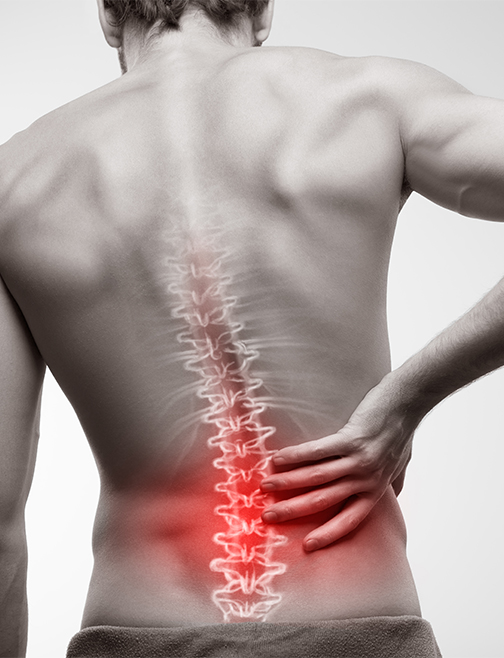
A Bertolotti resection is a surgical procedure that removes an abnormal bony structure in the lower spine. In patients with Bertolotti syndrome, the transverse process of the lowest lumbar vertebra is enlarged and forms a pseudoarticulation, a false joint, with the sacrum or iliac bone.
This extra joint was never meant to be there and can become inflamed, degenerate over time, and produce chronic one-sided lower back pain that does not respond well to standard treatments.
The resection removes this bony bridge. Without the abnormal contact point, the false joint no longer exists, the source of mechanical irritation is eliminated, and the lower spine is free to move normally again. This is a fundamentally different goal from spinal fusion, which would lock the joint in place rather than remove it.
Because only a small percentage of people have Bertolotti syndrome, and because it is frequently mistaken for disc herniation, facet joint disease, or sacroiliac joint dysfunction, many patients suffer for years before receiving an accurate diagnosis.
How VSI Performs Bertolotti Resection Surgery
VSI’s approach to Bertolotti resection reflects the same commitment to precision and motion preservation that defines every surgical decision. Rather than relying on large incisions and broad tissue disruption, VSI uses minimally invasive techniques that reduce surgical impact, protect surrounding structures, and support a smoother recovery.
Minimally Invasive Approach
Traditional open resection requires significant tissue disruption to access the pseudoarticulation, which sits deep in the lower spine.
VSI’s minimally invasive approach accesses the target through small incisions using specialized instruments, minimizing damage to the muscles and soft tissue surrounding the spine.
Robotic Guidance
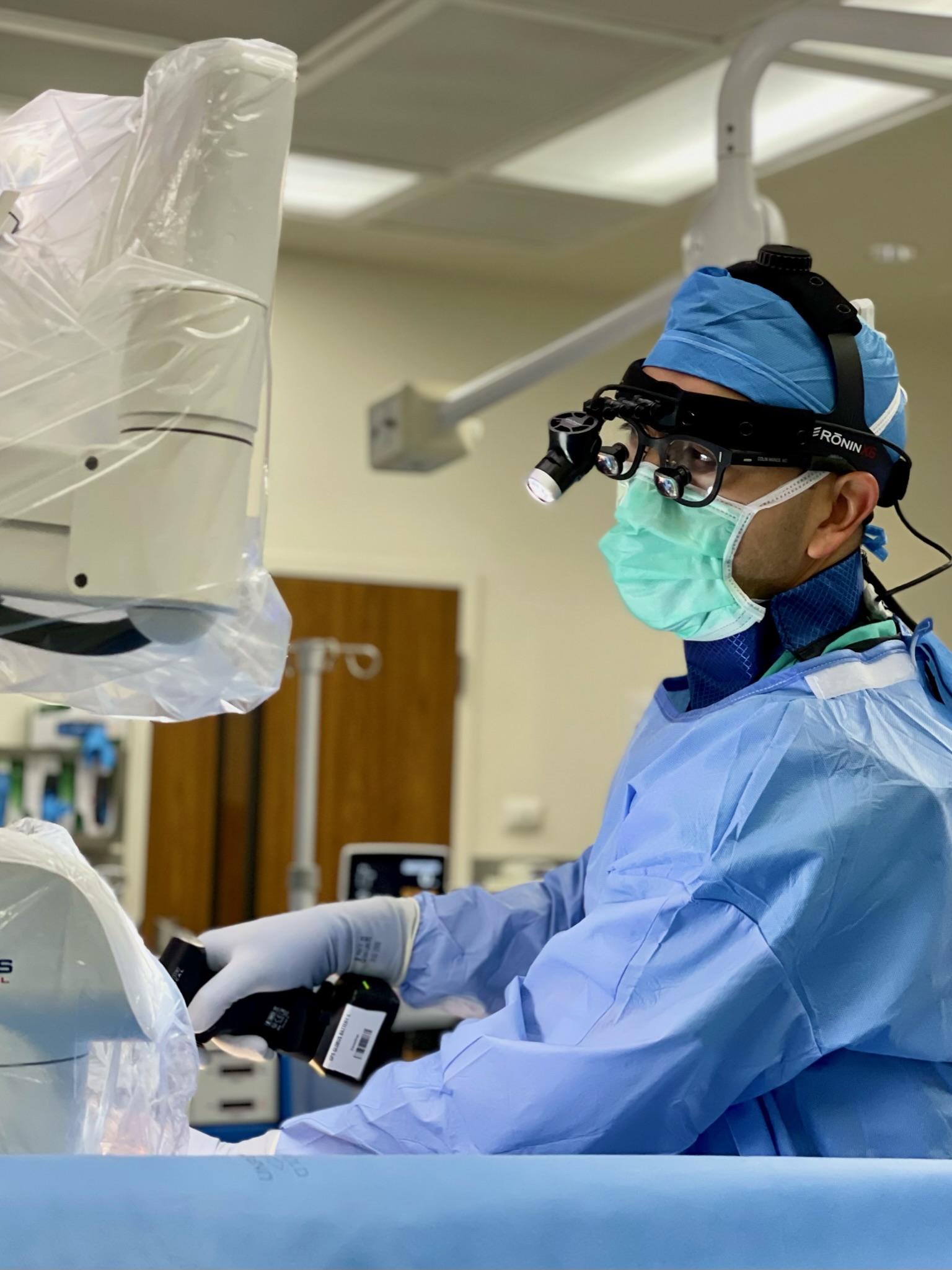
In November 2025, Dr. Christopher Good performed the world’s first robotic minimally invasive Bertolotti resection at Reston Hospital Center, using sophisticated preoperative computerized planning and robotic guidance to precisely direct bone removal.
This approach replaces the need for extensive surgical exposure with a precisely planned procedure that dramatically reduces surgical impact. Dr. Good previously served as lead author on the first scientific publication validating robotic bone-cutting in minimally invasive spine surgery, the foundational work that enabled this advancement.
Augmented Reality (AR) Navigation
Dr. Colin Haines also performed the world’s first augmented reality-guided Bertolotti resection at Reston Hospital Center in January 2026, using AR navigation to overlay real-time imaging data onto the surgical field and further enhance precision during bone removal.
What This Means for Patients
The combination of minimally invasive technique, robotic guidance, and AR navigation means the surgery can be performed with a higher degree of accuracy, less disruption to healthy tissue, and a recovery timeline that supports returning to normal activity sooner than traditional open surgery would allow.
The Benefits of Bertolotti Resection Surgery
Choosing to undergo a Bertolotti resection can offer several benefits for patients with symptomatic Bertolotti syndrome:
How VSI Performs Bertolotti Resection Surgery
Resection is a surgical procedure and is reserved for patients who have not achieved adequate, lasting relief through non-surgical care. Candidacy is determined through a comprehensive evaluation including imaging, clinical history, diagnostic injections, and a review of prior treatments.
Patients Who Are Typically Considered
- Confirmed diagnosis of Bertolotti syndrome with a symptomatic pseudoarticulation at the lumbosacral junction
- Chronic lower back pain, typically one-sided, that has not resolved with physical therapy, anti-inflammatory treatment, or corticosteroid injections
- Partial but unsustained relief from diagnostic or therapeutic injections into the pseudoarticulation, suggesting that joint is the pain source
- Patients who have undergone radiofrequency ablation of the pseudoarticulation joint with temporary benefit, indicating the joint is involved but ablation is not providing a permanent solution
- Overall health status and anatomy that supports a minimally invasive surgical approach
When Resection May Not Be the Right Step
- Pain that has not been localized to the pseudoarticulation through diagnostic injections
- Conservative care that has not yet been fully explored
- Cases where anatomy or degeneration indicates spinal fusion may be the more appropriate intervention
An evaluation at VSI will determine which path is right for your specific anatomy and history. For some patients, non-surgical options including specialized injections or radiofrequency ablation remain viable; for others, resection is the step that provides lasting resolution.
What to Expect: Before, During, and After Bertolotti Resection Surgery
Before Resection Surgery
Your surgical plan is developed based on your imaging, anatomy, and the specific characteristics of your pseudoarticulation. VSI uses advanced preoperative planning to map the exact target for bone removal before you enter the operating room. For out-of-area patients, the destination medicine team works with you ahead of travel to ensure everything is in place.
The Resection Procedure
Surgery is performed under general anesthesia. Through small incisions, the surgeon accesses the pseudoarticulation using minimally invasive instruments guided by robotic and/or AR navigation systems.
The abnormal bony bridge is removed, decompressing the false joint and eliminating the mechanical source of pain. The procedure does not involve spinal fusion; no hardware is implanted and no vertebrae are locked together. This inpatient procedure is relatively short and patients are often able to go home on the same day as their surgery.
Recovery After Bertolotti Resection
Because this is a minimally invasive procedure, recovery is generally faster and less disruptive than traditional open spine surgery. Because this is a minimally invasive procedure, recovery is generally faster and less disruptive than traditional open spine surgery. Most patients go home the same day as surgery. Before discharge, you will be able to walk, and movement typically begins in the secondary recovery area shortly after the procedure.
If you work remotely, you may be able to return to basic computer work within a few days, once you are off pain medication. For in-person work, VSI typically recommends taking two weeks off to make sure it is safe to resume driving. You can walk as much as you would like each day following surgery. Physical therapy starts around two weeks post-op, and from there, activity increases gradually as tolerated. More intense activity should generally wait until around six weeks post-op.
VSI Physical Therapy is available following surgery to support your recovery, rebuild strength, and restore full function. For destination medicine patients, the care coordination team assists with planning post-surgical rehabilitation arrangements.
Resection vs. Other Approaches to Bertolotti Syndrome
Bertolotti syndrome has a range of treatment options. Understanding how resection compares helps put the decision in context.
Resection vs. Spinal Fusion
Spinal fusion surgery at the lumbosacral junction locks the lowest vertebra to the sacrum, eliminating the problematic joint by stabilizing it. This can relieve pain but removes motion at that segment and involves the typical recovery timeline of a fusion procedure.
VSI’s position is that motion preservation is the priority whenever surgical anatomy allows. Resection removes the source of the problem without sacrificing spinal movement.
Resection vs. Radiofrequency Ablation (RFA)
Radiofrequency ablation denervates the pseudoarticulation joint, interrupting the pain signal. It can provide significant relief but is not a permanent structural solution. The nerve can regenerate, and the joint itself remains. For patients who get good but temporary relief from RFA, resection is often the more definitive next step.
Resection vs. Injections
Corticosteroid or stem cell injections into the pseudoarticulation can reduce inflammation and provide diagnostic confirmation that the joint is the pain source, but they do not address the structural problem. They are an important part of the non-surgical pathway and may be appropriate before considering resection. VSI’s injection options are typically explored before surgical options are discussed.
Why Patients Choose VSI for Bertolotti Surgery
VSI is recognized as the leading destination for Bertolotti syndrome surgical care. Dr. Good performed the world’s first robotic minimally invasive Bertolotti resection and Dr. Haines performed the world’s first AR-guided Bertolotti resection, milestones that reflect both the surgical innovation VSI brings to this rare condition and the clinical volume that makes continued advancement possible.
Because Bertolotti syndrome affects a small percentage of the population, most spine practices see very few cases. VSI’s concentration of cases means the surgical team has refined both technique and patient selection in ways that are not possible at lower-volume centers.
VSI is an independent practice. Insurance coverage never drives clinical recommendations. The surgical plan is built around your anatomy, your goals, and what the evidence supports, not what a coverage policy allows.
For patients traveling from outside the region, VSI’s destination medicine program provides end-to-end support including pre-surgical coordination, surgical care, and post-operative rehabilitation planning.
Get an Evaluation for Bertolotti Resection Surgery
If you have been diagnosed with Bertolotti syndrome or have been living with unexplained one-sided lower back pain that has not responded to treatment, an evaluation at VSI is a practical next step.
To schedule a consultation with Bertolotti syndrome expert Dr. Haines or another VSI spine specialist, request an appointment online or call (703) 709-1114.
Virtual Screening and In-Person Consultations Available:
Meet the Specialists Who Perform Bertolotti Syndrome Resections
Our team includes board-certified spine specialists with extensive experience diagnosing and treating Bertolotti syndrome. Each physician takes a personalized approach, combining advanced imaging, non-surgical therapies, and when necessary, surgical expertise to deliver the best possible outcomes.

Dr. Christopher Good is a double-board certified spine surgeon ranked in the top 7% of physicians nationwide. He has pioneered using robotics, navigation and augmented reality (AR) in spine surgery, resulting in improved outcomes and faster recovery for patients