
MILD Procedure
The MILD® (Minimally Invasive Lumbar Decompression): Quick Facts
- The MILD® (Minimally Invasive Lumbar Decompression) procedure is an outpatient treatment for lumbar spinal stenosis that relieves pressure on spinal nerves by removing small portions of thickened ligament through a tiny incision. It is performed without implants or general anesthesia.
- The procedure is designed for patients whose spinal stenosis is caused by ligamentum flavum hypertrophy (thickening of the spinal ligaments) and who continue to experience symptoms despite conservative treatment.
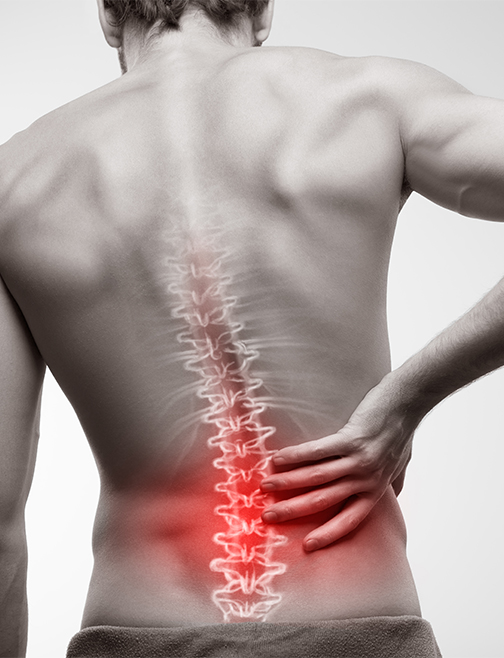
- Common symptoms treated with the MILD® procedure include lower back pain, leg pain, numbness, weakness, and difficulty standing or walking due to nerve compression, often called neurogenic claudication.
- The MILD® procedure is performed using X-ray guidance through a small incision, allowing the physician to remove excess ligament tissue while preserving the surrounding bone and spinal structures. Most patients return home the same day.
- Recovery is typically faster than with traditional open spine surgery, and many patients experience improvements in pain, walking tolerance, and mobility within weeks to months after the procedure.
- The MILD® procedure is often recommended as part of a comprehensive treatment plan for lumbar spinal stenosis and may help delay or eliminate the need for more extensive spine surgery in appropriately selected patients.
What Is mild® for Lumbar Spinal Stenosis (LSS)?
The mild® (Minimally Invasive Lumbar Decompression) procedure is an innovative approach to treating lumbar spinal stenosis that has transformed how we address persistent lower back and leg pain. Traditionally, lumbar spinal stenosis required surgical intervention with laminectomy or spinal fusion, involving extended recovery periods and significant surgical risks. With the MILD procedure, patients now have access to a minimally invasive, non-surgical alternative that achieves lasting decompression without hardware or major structural changes to the spine. This advanced treatment option provides meaningful relief while preserving spinal anatomy and dramatically reducing recovery time. The procedure is performed in an outpatient setting and offers a crucial middle ground between temporary relief methods like epidural steroid injections and invasive surgeries.
MILD Procedure Benefits
Unlike traditional invasive surgeries like surgical fusion, the MILD procedure changes the landscape entirely for those suffering with lumbar spinal stenosis. As a non-surgical option that is actually disease-modifying, MILD removes excess ligament tissue that’s compressing the spinal canal. This is anatomical change performed through a minimally invasive approach. Key benefits include:
- Little to no downtime: Most patients resume normal activities within 24 hours
- Stand up without pain: Ability to maintain upright posture and improved mobility
- Safety similar to an epidural: The procedure carries minimal risk, comparable to routine injections
- Lasting results: Unlike injections that wear off, MILD creates permanent anatomical changes
- Outpatient convenience: The 15-30 minute procedure is performed in an outpatient setting
What Conditions Does MILD Treat?
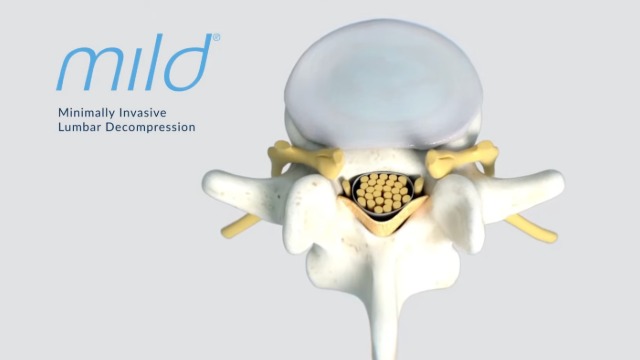
The MILD procedure is specifically designed to treat lumbar spinal stenosis caused by the thickening of the ligament that runs along the back of the spinal canal, called ligamentum flavum hypertrophy.
Understanding Your Diagnosis
When you receive your MRI report, you may see the phrase “ligamentum flavum hypertrophy” or “central canal stenosis.” This describes a condition where the ligament tissue in your lower back has thickened over time, creating a narrowing of the space around the spinal cord and nerves. This compressed space creates pressure that leads to pain, numbness, and difficulty walking or standing. The MILD procedure is most effective for:
- Mild to moderate central canal stenosis
- Ligamentum flavum hypertrophy (thickened ligament tissue)
- Patients experiencing leg pain, numbness, or heaviness when standing or walking
- Patients who find temporary relief by sitting or bending forward
Ready to see if MILD Procedure is Right for You?
Recovery After Non-Invasive MILD Procedure
Pre-Procedure Preparation
Before scheduling your MILD procedure, we often perform a diagnostic epidural steroid injection. This helps us confirm that your symptoms are coming from the central canal stenosis. If the injection provides temporary relief, it’s a strong indicator that the MILD procedure will be effective for long-term symptom resolution.
During the Procedure
The MILD procedure itself takes approximately 15-30 minutes and is performed in an outpatient setting. You’ll receive mild IV sedation to help you relax, along with local anesthetic to numb the treatment area. Most patients report that the procedure is not painful.
Using specialized imaging guidance, your physician accesses the affected area through a single, tiny incision smaller than a baby aspirin. Through this small opening, excess ligament tissue is carefully removed to open up space in the spinal canal and relieve pressure on the nerves.
Because the procedure is so minimally invasive, there are no implants, no stitches, no general anesthesia, and no major structural changes to your spine.
Recovering from MILD
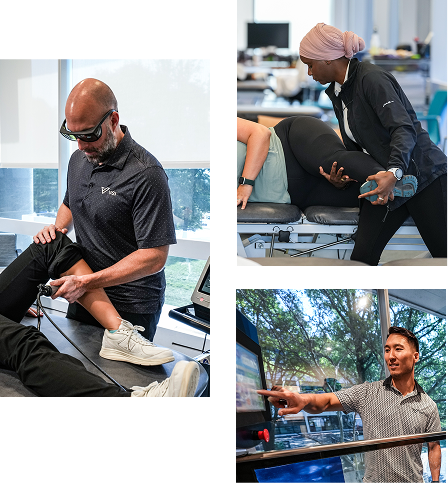
At VSI, we strongly recommend pairing the MILD procedure with physical therapy. When you’ve had spinal stenosis for a prolonged period, your body adapts by bending forward to relieve pressure. After the MILD procedure opens up that space, physical therapy helps retrain your body to stand upright and walk with proper posture.
Additionally, the MILD procedure can be combined with other regenerative treatments either before or after the decompression. This might include:
- Stem cell therapy to support nerve healing
- PRP (platelet-rich plasma) injections to reduce inflammation
- Targeted rehabilitation to address specific functional limitations
The beauty of the MILD approach is its flexibility. We can use it as a first step, a final step, or as part of a comprehensive treatment plan tailored to your specific needs. The sequence and combination of treatments depends entirely on what you’re experiencing and what provides the best outcome.
Optimizing Your MILD Procedure
At VSI, we believe recovery starts before your procedure even takes place and continues long after it is complete. This forward-thinking approach is at the heart of the Recovery Revolution™, a movement created to transform how patients experience healing and restoration.
We use advanced procedures and tools to set the stage for optimal recovery. Our recovery therapies reduce inflammation, enhance your healing capacity, and accelerate your return to the life you love. It is part of our 5 Pillars of Recovery, which include cutting-edge technology, surgical precision, continuity of care, and specialized recovery modalities.