
Aquatic Therapy
Pain Relief and Increased Mobility
Aquatic Therapy: Quick Facts
- Aquatic therapy is a form of physical therapy performed in a therapeutic pool, using the natural properties of water to reduce stress on the joints while improving strength, flexibility, balance, and mobility.
- The buoyancy of water helps support body weight, making movement less painful and allowing patients to perform exercises that may be difficult or impossible on land.
- Aquatic therapy is commonly used for patients recovering from spine surgery, orthopedic injuries, chronic back or neck pain, arthritis, sports injuries, neurological conditions, and balance disorders.
- Treatment is individualized and guided by a licensed physical therapist, with exercises designed to improve strength, range of motion, endurance, posture, and functional movement before transitioning to land-based therapy when appropriate.
- Most patients do not need to know how to swim to participate. Therapy is performed in a controlled environment using the support and resistance of the water to promote safe rehabilitation.
- Aquatic therapy is often combined with traditional physical therapy as part of a comprehensive rehabilitation program to reduce pain, improve function, and help patients return to their daily activities more comfortably.
What Is Aquatic Therapy?
Aquatic therapy is a form of physical therapy performed in a pool or other water environment under the guidance of a trained physical therapist. It uses the properties of water, such as buoyancy, resistance, hydrostatic pressure, and warmth, to help patients recover, manage pain, and improve mobility.
This highly-effective form of therapy is used at VSI Physical Therapy in Reston, often used for post-surgical recovery, injury rehabilitation, and athletic training. Aquatic therapy has the ability to improve strength and flexibility, helping patients achieve their goals and recover faster.
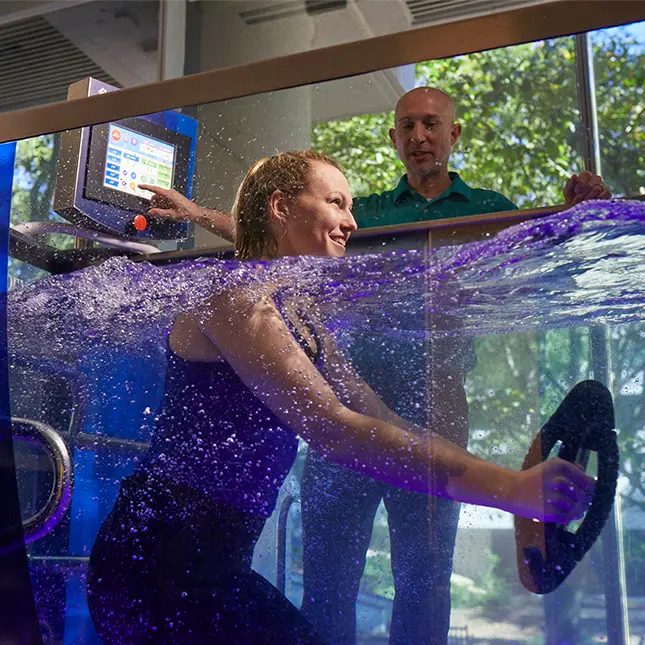
VSI Physical Therapy is proud to offer the only HydroWorx underwater treadmill in Northern Virginia.
Not all outpatient physical therapy clinics offer aquatic therapy. If aquatic therapy is available, it is most often performed in a pool setting where the height of the water is not adjustable and the water is not heated. In most circumstances, the therapist is supervising multiple patients at once in a pool setting. Our treatment model allows one-on-one supervised care with a therapist that provides specific exercise instructions to maximize your time in aquatic therapy.
Aquatic Therapy Benefits
Benefits of Aquatic Therapy After Surgery
For spine surgery patients, aquatic therapy supports healing and bridges the gap between early rehab and return to full activity by providing a low-impact rehabilitation environment. Here’s why it is impactful:
- Natural resistance is provided by the water in all directions, which exercises the muscles without use of heavy weights. This can be beneficial early on after an injury or procedure.
- Reduced load on healing tissues and improved circulation allows aquatic therapy to be introduced earlier in the rehab process than land-based exercises, promoting faster recovery. Patients can begin practicing walking, jogging, or sport-specific drills in water before safely returning to land-based versions.
- Balance is often improved by the challenge of an unstable water environment, which is especially valuable after lower extremity injuries or surgeries, where re-learning body control is crucial.
Benefits of Aquatic Therapy for Athletic Performance

Benefits of Aquatic Therapy for Injury Recovery
Aquatic therapy offers unique advantages that make it an ideal option for patients recovering from an injury. The properties of water create a therapeutic environment that supports healing while allowing for earlier and safer movement than traditional land-based rehabilitation. Here’s how:
- Warm water relaxes muscles, improves blood flow, and reduces pain sensitivity.
- Hydrostatic pressure from the aquatic treadmill decreases swelling and inflammation, which further assists with pain management.
- Buoyancy decreases the effect of gravity, reducing the load on joints, bones, and soft tissues. This allows safe movement and exercise to be implemented earlier in recovery.
Conditions Treated Using Aquatic Therapy
At VSI Physical Therapy, we use aquatic therapy to treat these and other conditions:
- Arthritis (Osteoarthritis and rheumatoid arthritis)
- Lower extremity ligamentous injuries
- Knee meniscus injuries
- Lumbar spine surgery rehabilitation
- Hip labral injuries
- Knee, ankle, foot, and hip surgery rehabilitation
- Fractures of the lower extremity (hip, knee, leg, ankle/foot)
- Soft tissue injuries (achilles tendonopathy, patellar tendonopathy, quad tendonopathy, calf strain, quad strain, hamstring strain, hip flexor strain, glute strain, trochanteric bursitis)
- Athletes undergoing early-stage rehab
- Balance disorders
- Neurological conditions
- Chronic pain conditions (low back pain, fibromyalgia)
Ready to see if Aquatic Therapy is Right for You?
What to Expect During Your Aquatic Therapy Session
Sessions are personalized and catered to each individual patient, with intensity varying depending on tissue irritability, phase of rehab, and goals of the patient. Sessions can range from simple activities like walking at a comfortable pace for the duration of the session to more intense workouts incorporating sprint intervals and plyometric training. The challenge of functional movements such as squats, lunges, and step-ups can be modified to suit each patient by altering the water height and incorporating the use of free weights.
Why VSI Offers Aquatic Therapy
Aquatic therapy is more than just a treatment, it is part of our comprehensive philosophy on recovery. We believe recovery starts before your surgery even takes place and continues long after the procedure is complete. This forward-thinking approach is at the heart of the Recovery Revolution™, a movement created to transform how patients experience healing and restoration.
Aquatic therapy is one of the advanced tools we use to set the stage for optimal recovery. This therapy remodels damaged tissue, enhances your healing capacity, and accelerates your return to the life you love. It is part of our 5 Pillars of Recovery, which include cutting-edge technology, surgical precision, continuity of care, and specialized recovery modalities.