
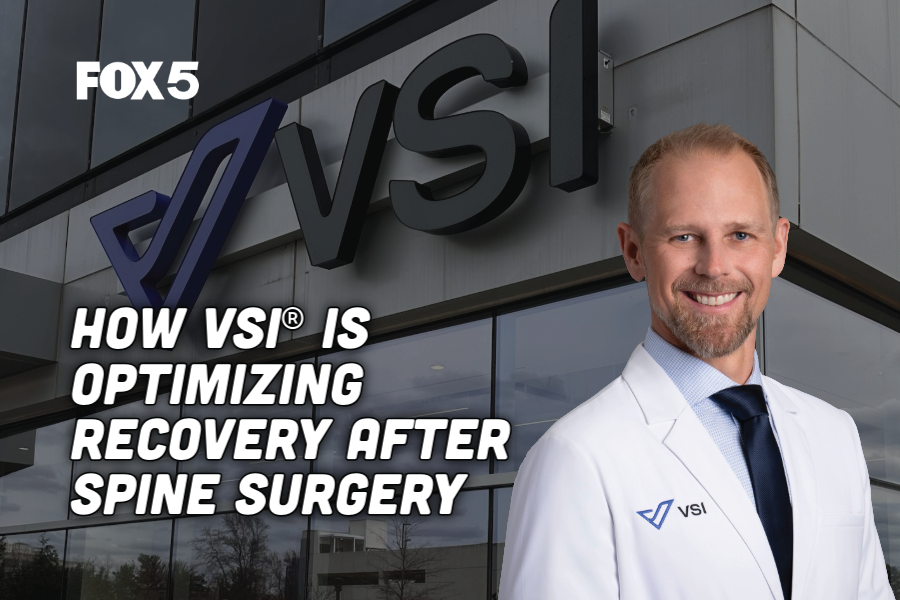
Dr. Good on Fox 5: Why Recovery After Spine Surgery Matters Most
VSI President Dr. Christopher Good discusses groundbreaking research and The Recovery Revolution™ on Fox 5 DC Morning News.
For the 1.6 million Americans who undergo spine surgery each year, the operating room is only the beginning of the journey. What happens after surgery, the recovery phase that determines whether patients return to active, pain-free lives, is often the most challenging and overlooked part of spine care.
Dr. Christopher Good, President and CEO of VSI, recently joined Fox 5 DC to discuss this critical gap in spine care and introduce a new approach that’s changing the recovery experience for patients nationwide: The Recovery Revolution™.
How VSI is Optimizing Recovery
The Study That Changed Everything
What began as a focused effort to improve patient outcomes at VSI evolved into one of the largest spine surgery recovery studies ever conducted. Dr. Good and his colleagues analyzed data from more than 50,000 patients across 140 hospitals, involving over 1,000 surgeons nationwide.
The research started with two urgent questions: How do we help patients feel better immediately after surgery? And in the midst of the opioid epidemic, how do we reduce narcotic dependence while still managing pain effectively?
The findings were clear and compelling. When recovery is planned, supported, and personalized, patients experience measurably better outcomes. They leave the hospital faster, achieve better pain control with fewer narcotics, and face a significantly lower risk of returning to the hospital with complications within the first 30 days.
“We’re finding we can make you feel better with less side effects,” Dr. Good explained during the Fox 5 interview. “You don’t want one surgery to lead to more surgeries.”
The Recovery Gap: Why It Exists
Despite these proven benefits, a troubling reality persists. Eighty percent of spine surgery patients experience post-operative pain, and up to 40% experience prolonged pain. Yet only half of all doctors focus meaningfully on recovery protocols.
Why does this gap exist?
Dr. Good points to two primary factors: training and time. Medical schools teach surgeons how to perform procedures in the operating room, but recovery-enhancing practices beyond basic opioid management rarely receive the same attention. When surgeons enter practice, they’re often overwhelmed by scheduling demands, leaving little time to develop comprehensive recovery plans with each patient.
“Surgeons are being trained to learn how to do surgery in the OR, and there’s really not enough effort into who should you do surgery on, and there’s almost no effort in training on how to help someone recover,” Dr. Good noted. “Doctors are busy, and you’re trying to talk to the patient about surgery. Not many doctors can take the time to then also get into all those details, and so it gets rushed.”
The result? Too many patients undergo surgery and then, weeks later, struggle to piece together their rehabilitation plan. That critical early recovery window, when the body is most responsive to intervention, gets lost.
Experience the Difference
Three Ways to Close the Recovery Gap
The Recovery Revolution™ addresses this systemic problem with three foundational principles designed to give recovery the same precision, resources, and innovation as the surgery itself.
Start Before Surgery
Recovery doesn’t begin after the procedure. It starts before you ever enter the operating room. Prehab programs, patient education, and targeted strength training prepare your body for the demands of surgery and position you to heal faster.
“We want to plan your recovery when we plan the surgery,” Dr. Good emphasized. “Too often you’re doing the surgery and then weeks later you’re trying to pick up the pieces and figure out what to do with your rehab, and you’ve lost this critical time.”
Every patient is different. Every surgery is different. But when the surgical team knows exactly what’s ahead, they can create an ideal, customized plan for each individual before the first incision.
Treat the Whole Patient
Modern spine surgery recovery goes far beyond traditional physical therapy. The Recovery Revolution™combines high-tech and holistic therapies to accelerate healing and restore full function.
From hyperbaric oxygen therapy and aquatic treadmill sessions to targeted nutrition plans and mindfulness practices, this comprehensive approach recognizes that true recovery addresses the whole person, not just the surgical site.
“The first couple weeks after surgery, you’re hurting, you’re inflamed, you’re stiff,” Dr. Good explained. “Being with a wonderful therapist and getting treated with laser and massage and exercises can help you recover so much better and faster.”
Make Recovery the Metric
Surgery is not the finish line. How patients live after the procedure is the true measure of success. The Recovery Revolution™ shifts the definition of surgical excellence from what happens in the OR to how patients function in their daily lives.
By measuring outcomes, tracking progress, and holding recovery to the same rigorous standards as surgical technique, this approach ensures patients aren’t just surviving their procedures but thriving afterward.
A Personal Mission
Dr. Good’s passion for revolutionizing spine surgery recovery isn’t purely academic. It’s deeply personal.
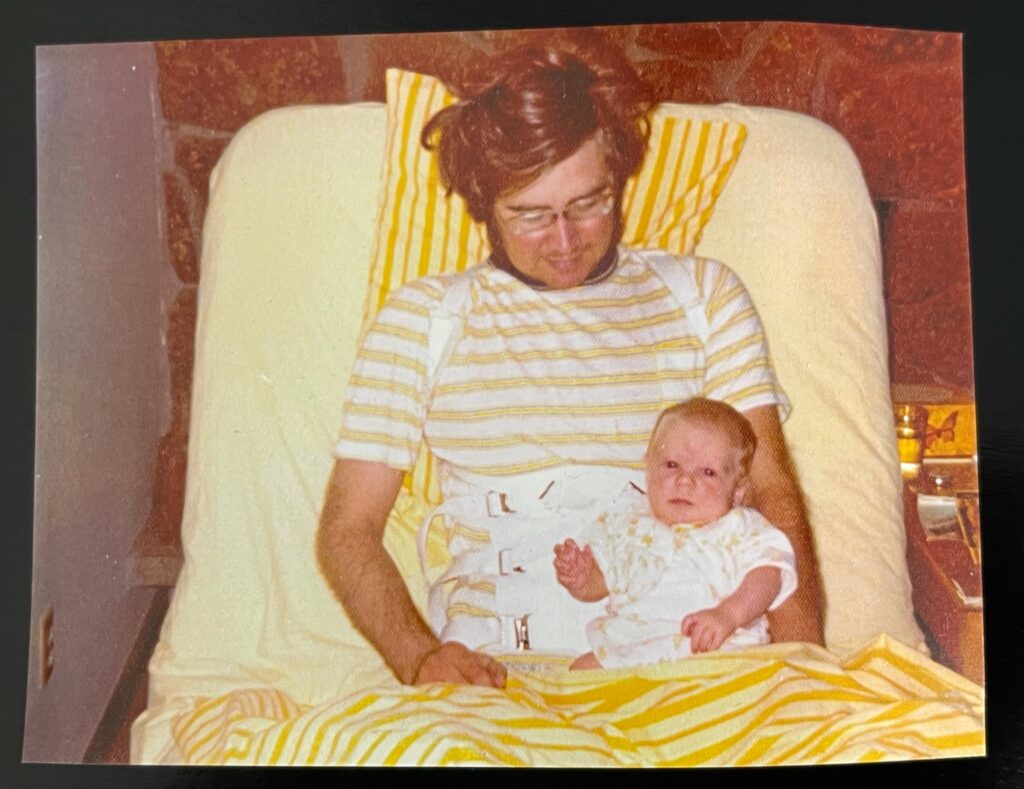
When Dr. Good was just 10 days old, his father fell from a chairlift and suffered a serious spine injury. The rudimentary surgery available at the time left his father in a body cast for three months, leading to muscle atrophy, narcotic dependence, and chronic pain that lasted for years.
“It was horrible,” Dr. Good reflected during the interview. “Now, if you look at how we’ve advanced over the decades, it’s tremendous.”
Today’s spine surgery patients walk within hours of their procedures. Pain control and anesthesia techniques have improved dramatically. Recovery protocols begin immediately after surgery rather than weeks later. The days of body casts and prolonged bed rest are, thankfully, long gone.
But Dr. Good believes we can do even better. His father’s difficult recovery continues to motivate his work to ensure no patient has to endure what his family experienced.
What Patients Should Know
If spine surgery is in your future, or if you’re currently navigating recovery, Dr. Good offers clear advice: advocate for yourself.
When choosing a surgeon, ask about their recovery philosophy. Do they plan recovery protocols before surgery? Are they involved in your post-operative care, or is it handed off to someone else? Do they offer comprehensive therapies beyond basic physical therapy?
Recovery planning should never feel like an afterthought. It should be integrated into your surgical consultation from the very beginning.
Dr. Good also acknowledges that personalized recovery isn’t one-size-fits-all. Financial resources, geographic location, available time, and individual health factors all play a role. The key is working with a team that meets you where you are and customizes the approach to your specific circumstances.
“What we did is we came up with what I consider the ideal plan for everyone, and then we have to meet people where they are,” Dr. Good said. “How much time do you have? Where do you live? What are your resources? That’s where the customization comes in. It’s not a cookie-cutter approach.”
The Recovery Revolution™ is Here
VSI’s commitment to transforming spine surgery recovery represents more than a program or protocol. It’s a fundamental shift in how we think about surgical care, a movement to ensure every patient receives the comprehensive support they deserve.
“We’re calling this The Recovery Revolution,” Dr. Good told Fox 5 viewers. “We’re really encouraging people to follow us on social, get the details, and make sure that you’re advocating for yourself so that you can be a part of this.”
For over 30 years, VSI has provided elite spine care to the local community and patients from around the world. The Recovery Revolution™ builds on that legacy, combining decades of surgical expertise with cutting-edge recovery science to deliver outcomes that go far beyond the operating room.
Because recovery isn’t just about healing. It’s about getting back to what makes you, you.
Watch the full Fox 5 DC interview with Dr. Christopher Good above, and learn more about The Recovery Revolution™ at VSI’s Recovery page.
Ready to experience recovery the way it should be? Schedule a consultation or call us at (703) 709-1114.
Topics covered
About the Author
Featured Resources
Insights to Achieve a Pain-Free Life