
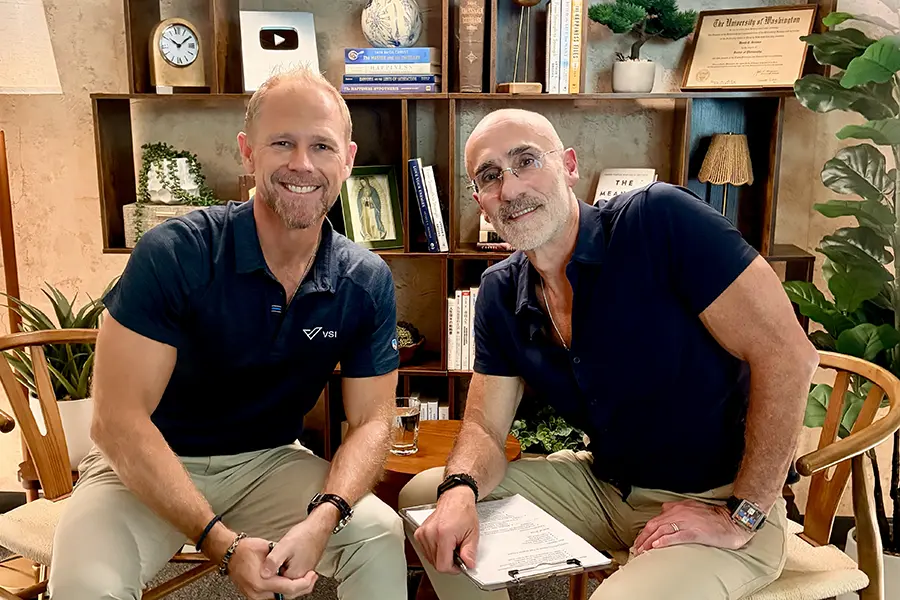
Longevity and Chronic Back Pain: Dr. Christopher Good on Finding Happiness Beyond Pain
Key Facts
- Dr. Christopher Good, President and CEO of VSI and a double board-certified spine surgeon, joined Arthur Brooks on Office Hours for an episode titled “The Truth About Pain and Happiness.”
- The conversation covers why back pain is so common, how Dr. Good helps patients set realistic goals, and why accepting pain and taking action can work side by side.
- Dr. Good’s path to spine surgery began in childhood, after his father suffered a severe spinal injury and lived with chronic pain for years.
- Dr. Good lives with disc degeneration and scoliosis himself, and he says his own experience has changed the way VSI cares for patients.
- His central message: accept what you cannot change, take action on what you can, and start by getting a clear explanation from an expert.
Can you live a happy, fulfilling life while experiencing chronic pain? According to VSI spine surgeon and President & CEO Dr. Christopher Good, the answer is yes. While the goal of spine care is to relieve pain whenever possible, lasting recovery also means helping patients regain function, find purpose, and reclaim the parts of life that matter most.
In a recent episode of Office Hours with Arthur Brooks, Dr. Good joined bestselling author and happiness expert Arthur Brooks for a conversation about the relationship between physical pain, emotional suffering, and happiness. Drawing on decades of treating patients with complex spine conditions, Dr. Good shared how accepting what we cannot control, while taking action on what we can, can transform the way we experience pain.
How Chronic Pain Shaped Dr. Good’s Approach to Spine Care
For Dr. Good, understanding the impact of chronic pain began long before he became a spine surgeon.
When he was just 10 days old, his father suffered a devastating spinal injury after falling from a chairlift. The injury led to years of chronic pain, medical complications, and limitations that ultimately shaped Dr. Good’s decision to pursue spine surgery.
Growing up, he witnessed firsthand how pain could affect not only someone’s physical health but also their identity, relationships, and overall quality of life.
Today, that experience continues to influence how he approaches patient care at VSI. His philosophy extends beyond treating a diagnosis to understanding how pain affects each person’s life and identifying what meaningful and full recovery looks like for them.
Dr. Good also shared his own experience managing degenerative disc changes and scoliosis, explaining how those challenges have motivated him to prioritize his physical health and become more proactive about his longevity and well-being.
Learn more about Dr. Good’s Personal Journey to Spine Care
Can You Be Happy Even When Chronic Pain Doesn’t Go Away?
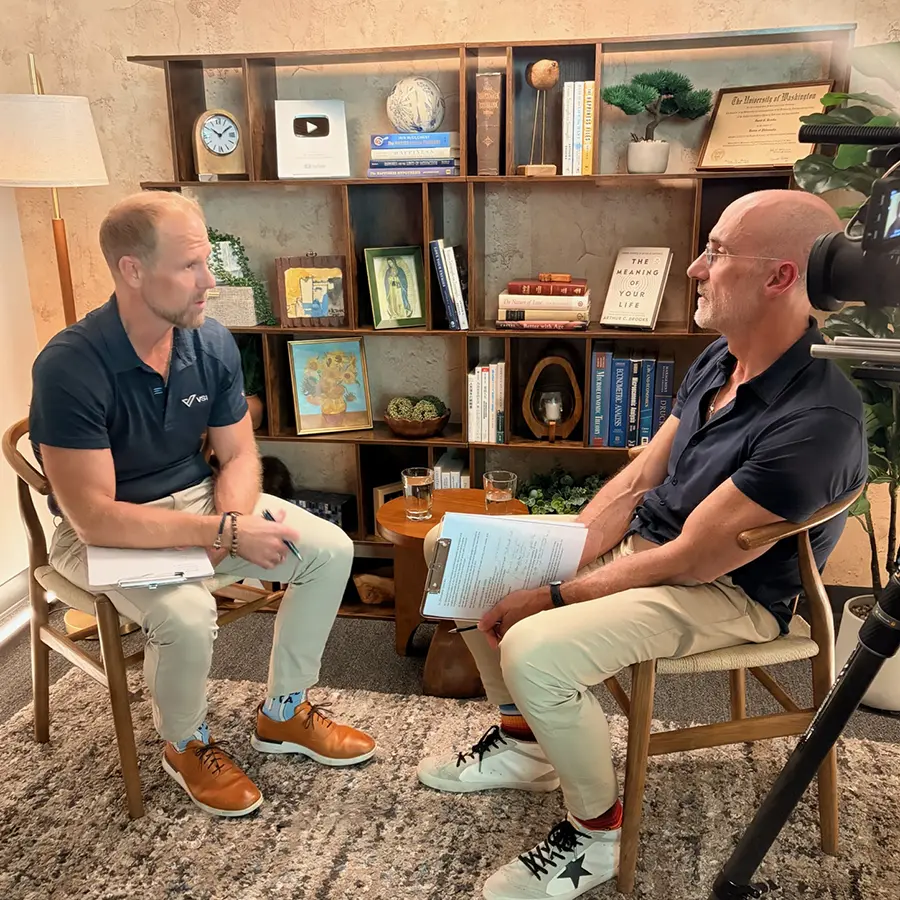
Yes. Chronic pain can affect your daily life without defining your entire life. As Dr. Good and Arthur Brooks discussed, managing chronic pain involves addressing both the physical source of pain and the emotional response to living with it.
Brooks introduced a concept that distinguishes pain from suffering: while pain may be unavoidable, our resistance to it can intensify the suffering we experience.
Dr. Good emphasized that acceptance and action are not mutually exclusive.
You can accept while still taking action.
Dr. christopher good on chronic BACK pain
For some patients, spine surgery or treatment can address the underlying structural problem and significantly reduce or eliminate pain. For others, the path forward may involve managing persistent symptoms while improving function, mobility, and quality of life.
At VSI, this distinction is central to creating personalized treatment plans that recognize both the physical and emotional impact of spine conditions.
Why Small Victories Are Essential to Chronic Pain Recovery
Recovery doesn’t always mean returning to exactly who you were before pain began. Sometimes, it means discovering what you can do today and building toward what you want to achieve tomorrow.
During the conversation, Dr. Good explained how VSI encourages patients to identify meaningful goals and celebrate their progress along the way.
For one patient, victory might mean returning to snowboarding. For another, it might mean attending their child’s sporting event, traveling comfortably, or simply getting through the day with less pain.
These milestones are more than physical achievements. They help patients rebuild their confidence and recognize that meaningful progress is possible even when some symptoms remain.
5 Life Lessons About Pain, Happiness, and Recovery
At the conclusion of the episode, Brooks reflected on five lessons from his conversation with Dr. Good that extend far beyond spine health.
1. Pain and Challenges Are a Normal Part of Life
Experiencing setbacks doesn’t mean you’ve failed. Physical discomfort, emotional challenges, and limitations are part of a normal human experience. Dr. Good added that trying to find only pleasure and avoid all discomfort tends to lead to less satisfaction and, over time, more pain. Understanding this can help us approach difficult circumstances with greater perspective rather than allowing fear to dictate our decisions.
2. A Fulfilling Life Is Possible Even With Pain
Dr. Good has treated patients living with significant medical challenges who continue to experience happiness and purpose. Rather than comparing your limitations with someone else’s abilities, focus on the activities and relationships that remain within reach. The point is to learn from others instead of comparing yourself, then set small goals and build on them over time.
3. You Have More Control Than You Realize
When something goes wrong, fight or flight takes over. Dr. Good’s advice is to step back and ask: am I on fire? Is there a bear chasing me? If not, you have a moment to think about how you will feel about this a year from now. You cannot control everything that happens to you, but you do have a say in how you respond. That agency can help you overcome problems, or live with them without letting them ruin your life.
While we cannot always control an injury or diagnosis, we can influence how we respond and what steps we take next. Seeking treatment, improving physical health, and establishing realistic goals can create opportunities for progress.
4. Focus on What You Can Do, Not Just What You Can’t
Chronic pain can change how we participate in activities we once loved, but it doesn’t have to eliminate our ability to find joy. Our brains are wired to pay attention to the negative and that “alarm system” has kept humans alive, but it is not the only choice. You can focus on what you have lost and become bitter, or you can focus on what you can still do. By recognizing and celebrating small victories, patients can shift their attention from lost abilities toward new possibilities.
5. Seek Help and Help Relieve the Suffering of Others
One of Dr. Good’s strongest messages was the importance of seeking answers rather than suffering in silence. His message is clear: if you are in pain, physical or emotional, see an expert and find out what is going on. He described a patient who finally came in after a long stretch of fear and disability. She received a clear explanation of her problem and an injection that relieved her pain in that moment, and she sat in her car and cried. Not every problem has a quick fix, but understanding what you are dealing with, and what your options are, can take away the fear that often makes pain worse.
Whether through a spine specialist, mental health professional, or supportive relationships, understanding your body and your available options can be an empowering first step. The conversation also concluded with a reminder of the value of helping others through their own pain.
Your Pain Doesn’t Have to Define Your Future
Living with chronic pain can be physically and emotionally exhausting, especially when answers feel out of reach. But as Dr. Good’s conversation with Arthur Brooks demonstrates, understanding your condition, setting meaningful goals, and taking an active role in your health can make a profound difference.
At VSI, our approach to spine care is focused on creating a personalized path to recovery that helps patients return to the people, activities, and experiences that give their lives meaning.
Watch the full conversation: Dr. Christopher Good on Office Hours with Arthur Brooks
If chronic neck or back pain is limiting your life, meet Dr. Christopher Good and explore your options for a personalized path forward.

Get a Second Opinion
Topics covered
About the Author
Featured Resources
Insights to Achieve a Pain-Free Life