
Spinal Fractures
Understanding the Symptoms, Causes, Diagnosis & Treatment Options for Spinal Fractures
Reviewed by: Dr. Christopher Good, Dr. Colin Haines, Dr. Ehsan Jazini
A spinal fracture is a break, collapse, or dislocation in one or more vertebrae, the bones that make up the spine. These injuries can happen in the neck, mid-back, or lower back, and they can range from stable compression fractures that heal with conservative care to severe unstable fractures that place the spinal cord or nerves at risk.
Some spinal fractures happen after a high-energy injury, such as a car accident, fall from height, or sports trauma. Others happen because the bones have weakened from osteoporosis, cancer, tumors, or another medical condition. In some cases, especially when bone quality is poor, a fracture can happen during a normal daily activity with little or no obvious trauma.
Because the spine protects the spinal cord and nerves, every spinal fracture should be evaluated carefully. The most important first step is determining whether the fracture is stable, whether the nerves or spinal cord are involved, and which treatment path will give you the safest recovery.
At VSI, our spine specialists diagnose and treat spinal fractures with advanced imaging, detailed evaluation, and a personalized care plan that may include bracing, physical therapy, medication, activity modification, , minimally invasive procedures, or surgery when needed.
Spinal Fractures: Quick Facts
- A spinal fracture is a break, collapse, or dislocation of one or more vertebrae in the spine.
- Spinal fractures can occur in the cervical spine (neck), thoracic spine (mid back), or lumbar spine (lower back).
- The most common symptom is moderate to severe back or neck pain that worsens with movement.
- More serious fractures can cause numbness, tingling, weakness, difficulty walking, bowel or bladder problems, paralysis, or spinal cord injury.
- Common causes include car accidents, falls, sports injuries, osteoporosis, tumors, cancer, ankylosing spondylitis, and other conditions that weaken bone.
- Diagnosis usually involves X-rays, CT scans, MRI, and an exam to check the spinal cord and nerves.
- Many stable fractures heal with conservative care, including bracing, physical therapy, medication, and activity modification
- Severe, unstable, or nerve-compressing fractures may require surgery to realign the spine, relieve nerve pressure, and stabilize the fractured vertebrae.
What is a Spinal Fracture?
A spinal fracture occurs when one or more vertebrae break, collapse, crack, or shift out of normal alignment. The vertebrae are the stacked bones that form the spinal column and protect the spinal cord.
When a vertebra is fractured, the injury may affect only the bone, or it may also involve the discs, ligaments, spinal canal, spinal cord, or nerves.
Spinal fractures are often thought of as traumatic injuries, and many are caused by high-energy events such as motor vehicle accidents, falls from height, or high-impact sports. But not every spinal fracture comes from a major accident.
People with osteoporosis, cancer, tumors, infection, ankylosing spondylitis, or other conditions that weaken the bones can fracture a vertebra during everyday movements, sometimes with little or no obvious injury.
The seriousness of a spinal fracture depends on:
- Where the fracture is located
- Whether the fracture is stable or unstable
- Whether the spine is still aligned properly
- Whether the spinal cord or nerves are compressed
- Whether the fracture is related to trauma, osteoporosis, cancer, or another medical condition
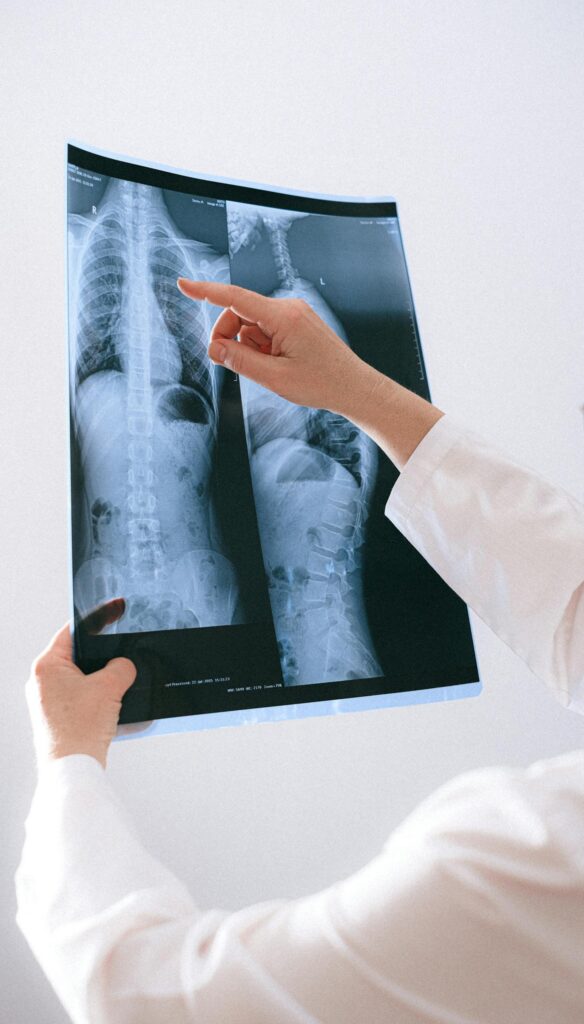
Why Spinal Fractures Need Prompt Evaluation
Some back and neck pain improves with time, but pain from a spinal fracture should not be ignored. A fracture can become more painful with movement, and an unstable fracture can worsen if the spine is not protected.
In the neck, spinal fractures are especially serious because of the close relationship between the cervical vertebrae and the spinal cord. A cervical fracture can cause bone fragments, swelling, or abnormal motion that may damage the spinal cord or surrounding nerves. In severe cases, spinal cord injury can lead to paralysis or become life-threatening.
Anyone who develops back or neck pain after a significant injury should be evaluated right away. This is especially important after a car accident, fall from height, sports collision, diving injury, or any trauma involving loss of consciousness.
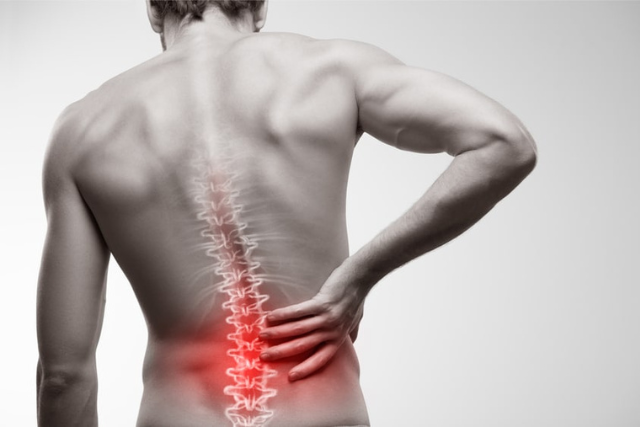
Seek Urgent Care for These Spinal Fracture Symptoms
Get urgent medical care if back or neck pain occurs after trauma, or if you have symptoms that may suggest spinal cord or nerve involvement.
Warning signs include:
- New weakness in the arms or legs
- Numbness or tingling that is worsening
- Difficulty walking
- Loss of balance
- Loss of bowel or bladder control
- Numbness around the groin or saddle area
- Severe neck pain after trauma
- Severe back pain after a fall or accident
- Fever with spine pain
- Unexplained severe pain without injury
- New spine pain in a patient with known cancer or osteoporosis
These symptoms do not always mean permanent damage has occurred, but they do require prompt evaluation.
Common Symptoms of Spinal Fractures
The most common symptom of a spinal fracture is pain near the injured area. Pain may be mild, moderate, or severe depending on the fracture type and location. It often gets worse with movement, standing, walking, coughing, sneezing, bending, twisting, or changing positions.
Symptoms may include:
- Sharp back or neck pain
- Pain that worsens when moving
- Tenderness over the spine
- Swelling near the injured area
- Muscle spasms
- Stiffness
- Difficulty standing upright
- Difficulty walking
- Reduced mobility
- Pain that improves when lying down
- Pain that radiates into the arms, ribs, abdomen, buttocks, or legs
- Numbness
- Tingling
- Weakness
- Balance problems
- A feeling that the spine is unstable
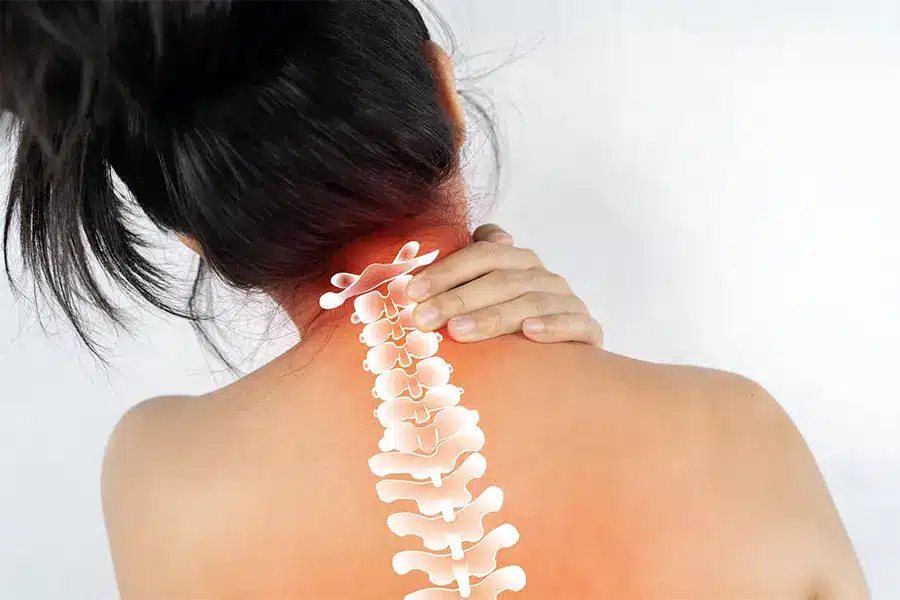
Find Pain Relief for Spinal Fracture Symptoms
Stable vs. Unstable Spinal Fractures
One of the most important questions after a spinal fracture is whether the injury is stable or unstable.
Stable Spinal Fracture
A stable fracture means the spine is still able to maintain alignment and protect the spinal cord and nerves. Stable fractures often heal with conservative care, such as:
- Physical Therapy
- Bracing
- Medication
- Activity modification
Unstable Spinal Fracture
An unstable fracture means the injured vertebra or surrounding ligaments may no longer support the spine safely. The spine may be shifted out of alignment, bone fragments may be near the spinal canal, or the spinal cord and nerves may be at greater risk.
Unstable fractures are more likely to need surgery, especially when there is:
- Deformity
- Nerve compression
- Spinal cord compression
- Progressive collapse
- Loss of spinal alignment
Stability is not something patients can reliably judge based on pain alone. Some serious fractures may not cause dramatic symptoms right away, while some stable fractures can be very painful. Imaging and a neurologic exam are needed to understand the full injury.
Types of Spinal Fractures
There are several types of spinal fractures. The fracture pattern helps determine whether the injury is stable, whether the spinal cord or nerves are at risk, and whether treatment can be conservative or surgical.
Compression Fracture
A compression fracture happens when the front portion of a vertebra collapses and loses height, often creating a wedge shape. These fractures are common in people with osteoporosis or other conditions that weaken bone. Compression fractures can also occur after trauma.
Many compression fractures are stable because the back part of the vertebra remains intact. Some heal with conservative treatment, including physical therapy, bracing, medication, and activity modification.
Others may require minimally invasive procedures such as kyphoplasty or vertebroplasty if pain is severe and does not improve.
Burst Fracture
A burst fracture is more severe than a simple compression fracture. In a burst fracture, the vertebra is compressed with enough force that it breaks in multiple directions. This can cause loss of height in both the front and back of the vertebra, and bone fragments may move toward the spinal canal.
Burst fractures are often caused by high-energy injuries, such as falling from a significant height or landing hard on the feet or buttocks.
Because burst fractures can be unstable and may threaten the spinal cord or nerves, they require careful imaging and specialist evaluation.
Chance Fracture
A Chance fracture is often called a seat belt injury. It typically occurs when the spine is violently pulled forward, such as during a car accident where the upper body moves forward while the pelvis is held in place.
This type of fracture often affects the lower thoracic or upper lumbar spine. Chance fractures can involve both the bones and ligaments, which may make the spine unstable.
Many require surgical stabilization, especially when there is significant pain, ligament injury, or instability.
Fracture-Dislocation
A fracture-dislocation occurs when a vertebra breaks and shifts out of its normal alignment. This is usually a severe injury and is often unstable.
Because it can compress the spinal cord or nerves, urgent evaluation and treatment are often needed.
Cervical Spine Fracture
A cervical fracture occurs in the neck. These fractures are taken very seriously because the cervical spine protects the spinal cord as it travels from the brain to the rest of the body.
Cervical fractures are usually caused by high-energy trauma, and patients should be evaluated urgently after significant neck injury, loss of consciousness, neurologic symptoms, or severe neck pain after trauma.seat belt injury. It typically occurs when the spine is violently pulled forward, such as during a car accident where the upper body moves forward while the pelvis is held in place.
This type of fracture often affects the lower thoracic or upper lumbar spine. Chance fractures can involve both the bones and ligaments, which may make the spine unstable.
Many require surgical stabilization, especially when there is significant pain, ligament injury, or instability.
Who is at a Higher Risk of Spinal Fractures?
You may be at higher risk for a spinal fracture if you have:
- Osteoporosis
- Osteopenia
- A history of cancer
- A prior spinal fracture
- Ankylosing spondylitis
- A recent car accident
- A fall from height
- A sports injury
- Long-term steroid use
- Poor bone health
- A condition that affects balance and increases fall risk
You may also be at higher risk if you have sudden back pain without a clear injury. When pain appears out of nowhere, especially in someone with osteoporosis, cancer history, fever, unexplained weight loss, or night pain, it should be evaluated rather than dismissed as a muscle strain.

How Are Spinal Fractures Diagnosed?
Diagnosis begins with understanding how the pain started, where it is located, and whether there are symptoms involving the spinal cord or nerves.
Your specialist will ask about:
- Trauma
- Falls
- Accidents
- Osteoporosis
- Cancer history
- Medications
- Prior spine conditions
- Whether pain is improving or worsening
Physical Exam
A physical exam helps identify tenderness, posture changes, muscle spasm, mobility limitations, and areas of pain. During your consultation, we will exam your:
- Strength
- Reflexes
- Sensation
- Balance
- Walking ability
This helps determine whether the fracture is affecting the spinal cord or nerves.
X-Rays
X-rays are often the first imaging test used to evaluate a suspected spinal fracture. They can show:
- Vertebral alignment
- Collapse
- Height loss
- Deformity
- Obvious fracture patterns
CT Scan
A CT scan gives a more detailed view of the bone. It helps spine specialists understand:
- The fracture pattern
- Whether bone fragments are present
- Whether the spinal canal is narrowed
- Whether the fracture is stable or unstable
CT imaging is especially useful after trauma.
MRI
An MRI may be used to evaluate:
- The spinal cord
- Nerves
- Discs
- Ligaments
- Soft tissues
- Signs of swelling or compression
MRI can also help determine whether a fracture is new or old and may be important when cancer, infection, or ligament injury is suspected.
Bone Density Testing
If a fracture may be related to osteoporosis, your doctor may recommend bone density testing, often called a DEXA or DXA scan.
This helps evaluate bone strength and future fracture risk. Treating the fracture is important, but preventing the next fracture is also part of long-term spine health.
How Are Spinal Fractures Treated?
Treatment depends on the type of fracture, the location of the fracture, the severity of pain, whether the spine is stable, whether nerves or the spinal cord are compressed, and whether the fracture is caused by trauma, osteoporosis, cancer, or another condition.
Many spinal fractures heal without surgery, but some need urgent stabilization.
Conservative Treatment
Stable fractures are often treated without surgery. Conservative care may include:
- Rest for a short period
- Activity modification
- Medication
- Bracing
- Physical therapy once the fracture has healed enough for rehabilitation
The goal is to control pain, protect the spine, avoid further collapse or movement, and help the patient return to normal function safely.
Bracing
A brace may be used to support the spine while the fracture heals. Bracing can limit painful movement and reduce stress across the injured vertebra.
The type of brace depends on the fracture location. Cervical fractures may require a neck brace, while thoracic or lumbar fractures may require a back brace.
Medications
Pain is often worse during the first few weeks after a spinal fracture. Pain management may include:
- Acetaminophen
- Anti-inflammatory medication when appropriate
- Muscle relaxers
- Short-term pain medication
- Bracing
- Careful activity modification
Medication should be individualized based on the patient’s health, fracture type, and risk factors.
Physical Therapy
Physical Therapy is an essential part of recovery once the fracture is stable enough. Physical therapy can help:
- Reduce pain
- Improve mobility
- Restore strength
- Rebuild balance
- Improve posture
- Reduce the risk of future injury
Patients recovering from osteoporotic fractures may also benefit from fall-prevention work and safe strengthening exercises.
Surgery
Surgery may be recommended for:
- Unstable fractures
- Spinal cord compression
- Nerve compression
- Deformity
- Progressive collapse
- Fracture-dislocation
- Severe pain that does not improve
- Neurologic symptoms such as weakness, numbness, or difficulty walking
Surgical treatment may include decompression to remove pressure from the spinal cord or nerves, stabilization with screws and rods, fusion to support the injured segment, or a combination of procedures.
The goal is to protect the nerves, realign the spine, stabilize the fracture, and support healing.
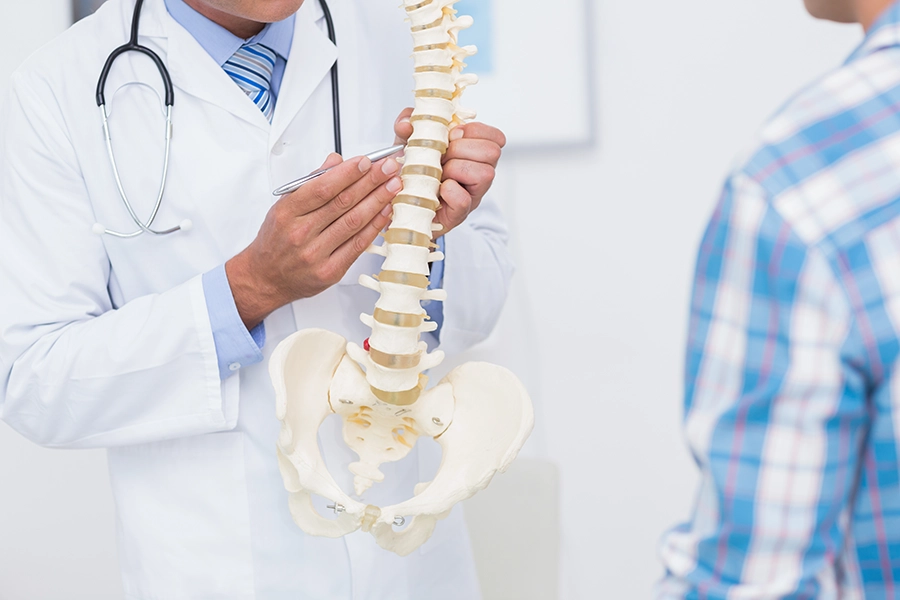
Spinal Fracture Treatment Pathway
Most spinal fractures follow a step-by-step decision process.
First, the spine specialist determines whether the fracture is stable or unstable. Next, they evaluate whether the spinal cord or nerves are involved. Then they identify the cause of the fracture, such as trauma, osteoporosis, or other condition.
From there, treatment may include:
- Bracing and medication for stable fractures
- Close follow-up and repeat imaging to monitor healing
- Physical Therapy once it is safe to move more actively
- Surgery for fractures that are unstable, deforming, or compressing the spinal cord or nerves
What Should You Avoid With a Spinal Fracture?
Activity restrictions should come from your spine specialist because they depend on the fracture type and stability.
In general, patients may need to avoid:
- Heavy lifting
- Bending
- Twisting
- Impact exercise
- Running
- Jumping
- Contact sports
- Prolonged unsupported sitting
- Returning to normal activity too quickly
You should not try to stretch through severe pain or force movement if a fracture has not been cleared as stable.
The goal is not to remain inactive forever. The goal is to protect the spine during the early healing phase, then rebuild strength and mobility in a controlled way.
Can You Walk With a Spinal Fracture?
Some patients can walk with a spinal fracture, especially if the fracture is stable and there is no spinal cord injury. However, walking may be painful, and not every fracture is safe to walk on without guidance.
If the fracture happened after trauma, or if you have weakness, numbness, balance problems, or worsening pain, you should be evaluated before increasing activity.
Your spine specialist will tell you when walking is safe, whether a brace is needed, and how to increase movement during recovery.
What Is the Healing Timeline for a Spinal Fracture?
Healing time depends on the fracture type, bone quality, treatment plan, and whether nerves are involved.
Many stable fractures require reduced activity and close monitoring for about 12 weeks while the bone heals. During this time, your specialist may use multiple X-rays or other imaging to make sure the fracture is not worsening.
Pain is often most intense during the first few weeks and may gradually improve as the fracture stabilizes. Some people recover well with bracing and rehabilitation, while others need minimally invasive treatment or surgery.
Patients with osteoporosis, or multiple fractures may need a more comprehensive plan for bone health and long-term prevention.
Can Spinal Fractures Heal Without Surgery?
Yes, many spinal fractures can heal without surgery, especially stable compression fractures without spinal cord or nerve compression.
Conservative treatment may include:
- Physical Therapy
- Bracing
- Medication
- Activity modification
Surgery is not recommended simply because a fracture exists. It is considered when the fracture is unstable, pain is severe and persistent, the spine is losing alignment, or the spinal cord or nerves are at risk.
Preventing Future Spinal Fractures
Treating the current fracture is only part of the recovery plan. If osteoporosis, low bone density, poor balance, or another medical condition contributed to the fracture, preventing future fractures is just as important.
Your care plan may include:
- Bone density testing
- Osteoporosis medication when appropriate
- Vitamin D or calcium guidance
- Fall-prevention strategies
- Strength and balance training
- Posture work
- Coordination with your primary care physician or other specialists
Patients who have already had one spinal compression fracture may be at higher risk for additional fractures, so long-term bone health should not be overlooked.
Conditions That Can Feel Like a Spinal Fracture
Not every episode of back pain is caused by a fracture, but certain symptoms should raise concern.
Muscle Strain
A muscle strain can cause pain and spasms, but it usually improves with time and does not cause vertebral collapse.
Herniated Disc
A herniated disc can cause back pain with leg pain, numbness, tingling, or weakness.
Spinal Stenosis
Spinal stenosis can cause back and leg symptoms that worsen with standing or walking.
Infection
A spinal infection may cause spine pain with fever, illness, or worsening pain that does not improve with rest.
Tumor
A tumor may cause severe, unexplained, progressive, or night pain.
Osteoporotic Compression Fracture
An osteoporotic compression fracture may cause sudden pain after a minor movement or no clear injury at all.
Because these conditions can overlap, imaging and a specialist evaluation are often needed to identify the true cause of pain.
Why Choose VSI for Spinal Fracture Care?
Spinal fractures require more than a quick X-ray and a wait-and-see approach. The most important question is whether the fracture is stable and whether the spinal cord or nerves are safe.
VSI’s spine specialists use advanced imaging, detailed evaluation, and decades of spine-specific experience to determine the safest and most effective path forward.
Our team treats spinal fractures with both non-surgical and surgical options, including:
- Bracing
- Pain management
- Physical therapy
- Decompression
- Stabilization
- Fusion when appropriate
Through VSI’s comprehensive model, patients have access to spine surgeons, non-surgical spine specialists, physical therapy, advanced technology, and Recovery Revolution™ support in one coordinated care environment.
The goal is not just to treat the fracture. The goal is to help you heal safely, protect your nerves, restore function, and reduce the risk of future spine problems.
Your Path to Relief Starts Here
You may be dealing with severe pain after an injury, a new diagnosis from the emergency room, or sudden back pain that appeared without warning.
VSI specializes in diagnosing and treating spinal fractures with personalized care, advanced imaging, non-surgical treatment, and surgical expertise when needed.
Same-week appointments are available, and no referrals are needed.
Meet the Specialists Who Treat Spinal Fractures
Our team includes board-certified spine specialists with extensive experience diagnosing and treating spinal fractures. Each physician takes a personalized approach, combining advanced imaging, non-surgical therapies, rehabilitation, minimally invasive procedures, and when necessary, surgical expertise to deliver the safest possible outcome.

Dr. Christopher Good is a double-board certified spine surgeon ranked in the top 7% of physicians nationwide. He has pioneered using robotics, navigation and augmented reality (AR) in spine surgery, resulting in improved outcomes and faster recovery for patients