
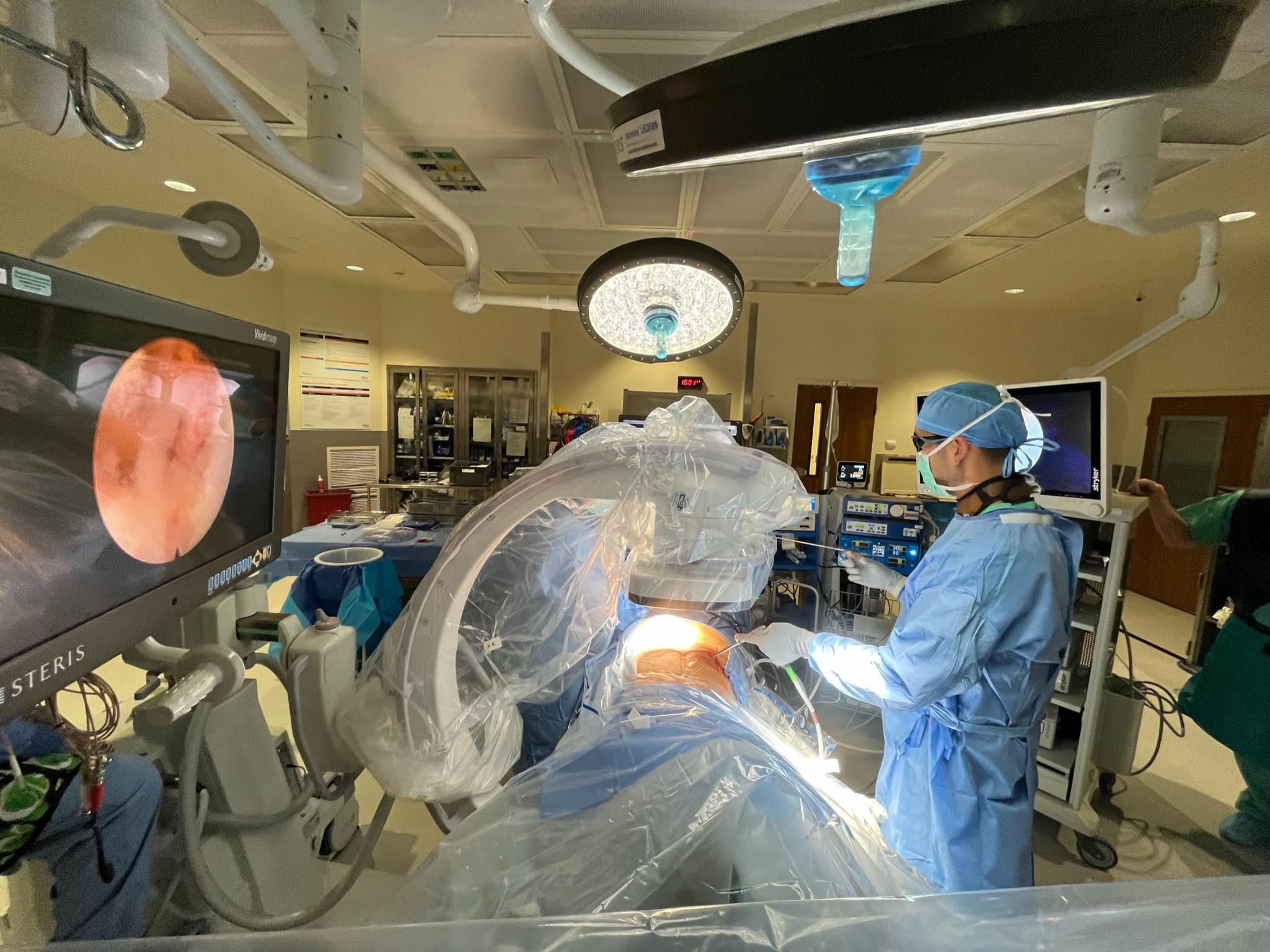
What Are the Benefits of Minimally Invasive Spine Surgery?
Minimally Invasive Spine Surgery: Key Facts
- Uses smaller incisions and muscle-sparing techniques to access the spine
- Causes less disruption to surrounding muscles and soft tissue
- Often results in less post-operative pain
- May allow for shorter hospital stays or same-day discharge
- Can support a faster return to normal daily activities for some patients
Living with back or neck pain can wear you down over time. Simple things like sitting at a desk, driving, or getting a full night’s sleep can become frustrating or even unbearable. Most people try conservative treatments first, such as physical therapy or injections. When those options no longer provide relief, surgery may be the best path forward to relieve your pain.
Over the last several decades, spine surgery has changed significantly. Many procedures that once required large incisions and long recovery times can now be performed using minimally invasive techniques. These approaches aim to treat the source of pain while placing less stress on the surrounding muscles and tissues.
Minimally invasive spine surgery, like spinal fusion or disc replacement, is not about taking shortcuts or leaving you with unresolved symptoms. It is about using precision, technology, and experience to solve a problem while reducing unnecessary disruption to the body. For many patients, that difference matters not just in the operating room, but throughout the recovery process.
Learn more about what minimally invasive spine surgery is, how it differs from traditional surgery, and why it may offer meaningful benefits for the right patients.
What Is Minimally Invasive Spine Surgery?
Minimally invasive spine surgery refers to a group of surgical techniques that allow surgeons to access the spine through small, targeted openings rather than a single large incision. The goal is to reach the problem area while disturbing as little healthy tissue as possible.
Instead of cutting through muscle to expose the spine, surgeons work through natural tissue planes using specialized instruments that stretch the muscle(s) instead of cutting them. Tools such as tubular retractors, microscopes, endoscopes, and real-time imaging help guide the procedure and maintain visibility, even through a narrow incision.
Because the muscles are gently moved aside rather than cut, they can return to their normal position after surgery. This approach often leads to less post-operative soreness and helps preserve strength and function during recovery.
How Minimally Invasive Spine Surgery Compares to Traditional Surgery
Surgery has changed drastically between now and when VSI was founded in 1992. With more traditional spine surgery, larger incisions are required along with more extensive damage to muscle tissue in order to access the spine. This can also lead to more blood loss during surgery, longer healing times and increased discomfort after surgery.
Minimally invasive techniques are designed to limit that impact. By reducing muscle disruption and blood loss, these procedures may support a smoother recovery, getting patients back to their lives much quicker.
At VSI, all of our surgeries are performed with minimally invasive techniques.
The Benefits of Minimally Invasive Spine Surgery
Less Damage to Muscles & Surrounding Tissue
Minimally invasive techniques are designed to avoid cutting through large muscle groups to reach the spine. Instead, muscles are gently moved aside and allowed to return to their natural position after surgery.
What this can mean for patients:
- Less trauma to healthy muscle tissue
- Better preservation of strength and mobility
- Less stiffness during early recovery
Reduced Post-Surgical Pain
Because there is less muscle and soft-tissue disruption, many patients report lower levels of pain after surgery compared to traditional surgeries.
Potential benefits include:
- More manageable post-operative discomfort
- Reduced reliance on strong pain medications for some patients
- Improved comfort during the first phase of recovery
Pain levels vary from person to person, but minimizing tissue damage often makes a noticeable difference.
Shorter Hospital Stay
Many minimally invasive spine procedures allow patients to return home sooner. Depending on the procedure and individual health factors:
- Some surgeries are performed on an outpatient basis
- Others require only a short hospital stay
- Recovery can often begin in a familiar home environment
Faster Return to Daily Activities
While healing takes time, minimally invasive approaches may help patients resume everyday activities sooner.
Patients may notice:
- Earlier ability to walk and move comfortably
- Less difficulty sitting, standing, and changing positions
- A smoother transition into physical therapy or rehabilitation
Faster recovery does not mean skipping restrictions. Following post-operative instructions is still critical for long-term results.
Lower Risk of Certain Complications
While all medical procedures carry some risk, no matter how small, we do everything we can before, during and after surgery to make each patient’s risk of complications as low as possible. This is why choosing the right surgeon and the right procedure are vital in restoring your health. With minimally invasive spine surgeries, smaller incisions and reduced tissue exposure may help lower the likelihood of certain complications including:
- Reduced blood loss during surgery
- Lower infection risk related to smaller incisions
- Less post-operative inflammation
Smaller Incisions & Minimal Scarring
Minimally invasive spine surgery typically uses smaller incisions than traditional open surgery.
For many patients, this results in:
- Less visible scarring
- Faster skin healing
- Reduced irritation at the incision site
While cosmetic outcomes are not the primary goal, this is often a welcome secondary benefit.
Conditions That Can Be Treated With Minimally Invasive Spine Surgery
Minimally invasive spine surgery can be used to treat many common spine conditions, particularly those involving nerve compression, instability, or degenerative changes. That said, not every condition is a good fit. The exact approach depends on where the problem is located, how severe it is, and how the spine is affected overall.
Conditions that are often treated using minimally invasive techniques include:
- Herniated or bulging discs that place pressure on spinal nerves
- Spinal stenosis, where narrowing of the spinal canal causes pain, numbness, or weakness
- Degenerative disc disease that leads to chronic back or neck pain
- Spondylolisthesis, when one vertebra slips forward over another
- Certain cases of spinal instability or recurrent disc herniation
In some situations, minimally invasive techniques may also be used as part of a larger treatment plan, such as stabilizing the spine while preserving as much motion as possible.
A thorough evaluation is essential to determine what type of minimally invasive approach may be right for you.
What to Expect Before, During, and After Minimally Invasive Spine Surgery
Understanding what the process looks like can help patients feel more prepared and confident going into surgery. While details vary by procedure, most minimally invasive spine surgeries follow a similar overall path.
Before surgery, patients undergo a detailed evaluation that may include imaging studies, physical exams, diagnostic tests and a review of prior treatments. This step helps confirm the diagnosis and determine whether a minimally invasive approach is appropriate. Surgical goals, risks, and recovery expectations are discussed in advance so there are no surprises.
On the day of surgery, minimally invasive procedures are performed using specialized instruments and imaging guidance. Incisions are typically small, and the surgical team works through narrow access points to treat the affected area of the spine. Depending on the procedure, surgery may take anywhere from one to several hours.
After surgery, patients are up and walking the same-day. Some procedures allow patients to go home within hours, while others may require a short hospital stay. Recovery focuses on gradually restoring movement, managing discomfort, and protecting the spine as it heals.
At VSI, recovery planning is personalized. We know that recovery is the real goal of undergoing any procedure, that’s why we have all of the tools you need to fully recover. Patients receive clear guidance on activity restrictions, physical therapy, and follow-up care, with the goal of supporting safe healing and long-term results rather than rushing the process.
How VSI Approaches Minimally Invasive Spine Surgery
Minimally invasive spine surgery is not a one-size-fits-all solution. At VSI, the approach starts with determining whether a minimally invasive technique is truly the best option for each patient’s condition and long-term outcome.
Key principles that guide the approach include:
- Careful diagnosis using advanced imaging and clinical evaluation
- Matching the surgical technique to the specific spinal problem, not forcing any one procedure
- Using minimally invasive methods when they offer a clear advantage in recovery, stability, or tissue preservation
- Prioritizing durable pain relief and restored function over shorter-term recovery alone
When to Consider a Spine Surgery Consultation
If back or neck pain continues despite conservative treatment, a spine surgery consultation can help clarify options and next steps. Surgery is not always necessary, but understanding what is causing symptoms is an important part of making informed decisions.
A consultation may be appropriate if:
- Pain is persistent or worsening despite non-surgical care
- Symptoms such as numbness, weakness, or radiating pain affect daily activities
- Imaging shows structural issues that may benefit from surgical treatment
- Quality of life is significantly limited by spine-related pain
A thorough evaluation allows patients to understand whether minimally invasive spine surgery is an option, whether another treatment path makes more sense, or whether continued non-surgical care is appropriate.

Take the First Step to Relief
Topics covered
About the Author
Featured Resources
Insights to Achieve a Pain-Free Life