
The Future of Spine Surgery: Better Options, Better Recovery
Key Facts
- The short answer: Two spine surgeons can review the same MRI and recommend different treatments, because training, and comfort with specific techniques all shape what a surgeon offers.
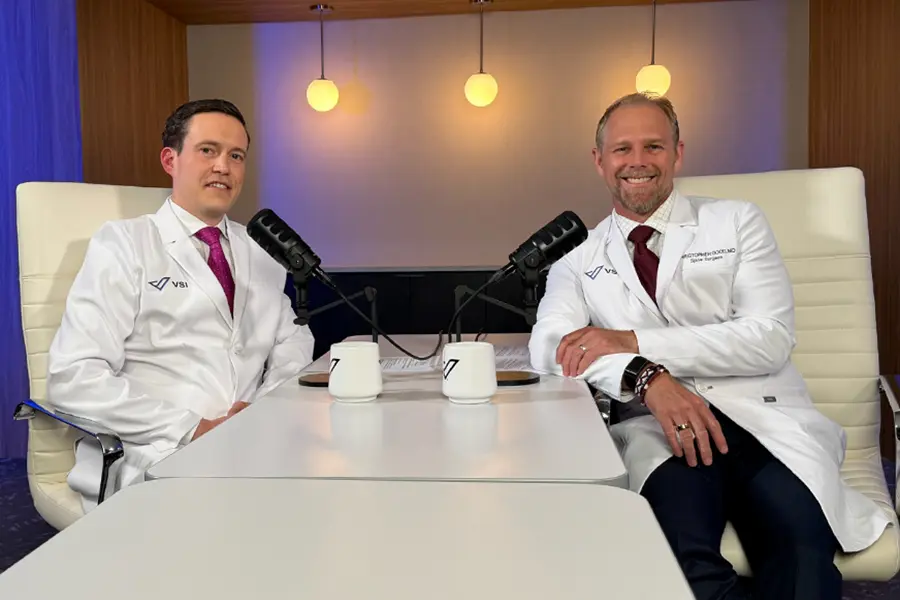
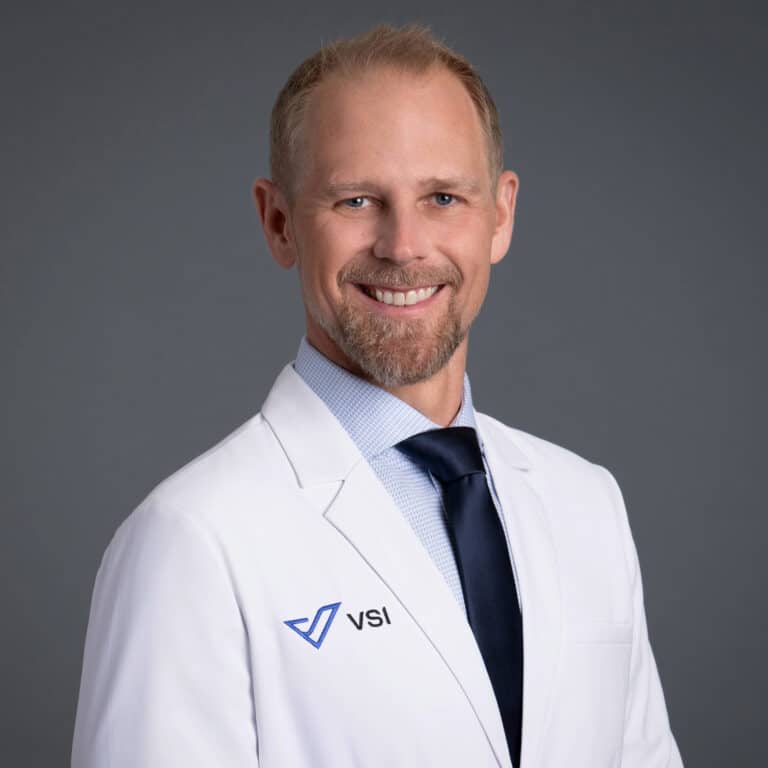
- Featuring: Dr. Christopher Good, spine surgeon and CEO of VSI, and Dr. Alex Upfill-Brown, VSI spine surgeon.
- Their advice: For planned, non-emergency spine surgery, get a second opinion, and a third if the first two don’t line up.
- At VSI, recovery is planned before surgery through the Recovery Revolution™.
You’ve seen a surgeon, maybe two, and the answers didn’t match. That inconsistency is real, and it isn’t a sign you’ve done anything wrong. Dr. Good faces it too: “When I show my spine MRI to one of my colleagues, I get different opinions [on] what I should do, and I’m a spine surgeon.”
In this episode of Get Back to Your Life®, Dr. Christopher Good sits down with VSI spine surgeon, Dr. Alex Upfill-Brown, to talk about why that happens and how to find the right answer for your spine.
Why do spine surgeons recommend different treatments?
Spine surgery hasn’t been standardized the way hip and knee replacement have, and what a surgeon recommends often reflects what they were trained to do. “You could go see a number of different spine surgeons [and] get very, very different responses,” Dr. Upfill-Brown says, “and in some cases end up with a surgery that might not have been the best solution for you.”
Dr. Good puts it another way: “If the only tool in your toolbox is a hammer, everything looks like a nail.” He has trained across procedures so the decision stays focused on the patient, not on what he prefers to do.
Why isn’t motion preservation offered more often?
Spinal fusion surgery is still one of the most common spine surgeries, even though much of orthopedics has moved past fusing joints. Dr. Upfill-Brown worked on motion-preserving devices in an engineering lab during residency, and it changed how he sees fusion. “So much of what we do when we look at a spine is a static image,” he says. “We really don’t, I think, as a field appreciate how much the spine moves.” He wants to stop putting patients “on this clock,” waiting to see whether the level next to a fusion wears out.
Both surgeons named factors patients rarely hear when they are considering spine surgery. Some surgeons weren’t trained in artificial disc replacement and it often takes more precision and more time in the operating room. In Dr. Good’s experience, insurers reimburse it at a much lower rate than fusion in most cases. Decompression-only surgery, which removes the bone or ligament pressing on a nerve without fusing the spine, is also usually paid less. Endoscopic spine surgery, done through a pencil-sized incision with a camera, is often denied by large insurers, according to Dr. Good.
That doesn’t make motion preservation right for everyone. “Certain people are just not candidates,” Dr. Good says. “In fact, a lot of people aren’t.” If you’re told an option isn’t for you, it’s fair to ask whether the reason is your spine or something else.
How do you choose a spine surgeon?
“Getting multiple opinions is invaluable,” Dr. Upfill-Brown says. “That’s something I would do for my own family members, something I do myself.”
He encourages patients to talk through trade-offs openly. A smaller surgery may mean a faster recovery but a lower chance of lasting success. A bigger surgery may be more likely to work but carry higher risk. The right choice depends on what you need to get back to.
Dr. Good offers a simple test: imagine your surgery doesn’t go exactly to plan. Is this a surgeon you could reach, talk to, and stick with? Ask about other approaches and why they aren’t right for you. And if a surgeon is out of the room in five minutes and won’t discuss alternatives, “maybe you’ve answered your question.”
Technology is also helping narrow the gaps between surgeons. Dr. Good performed the world’s first spine surgery with the Stealth AXiS Autopilot robotic system, and Dr. Upfill-Brown sees AI helping surgeons plan alignment with the whole spine in mind.
Why should recovery planning start before surgery?
Too often, patients go home, wait for a follow-up visit, then get a physical therapy prescription weeks later, when the practice they wanted is booked. Dr. Good thinks that’s backward. “If I know the patient, I know all about them, and I know exactly what surgery I’m going to do to them, I should be able to really plan out ahead of time, here’s what the ideal recovery is going to be.”
That thinking became VSI’s Recovery Revolution™, which schedules a patient’s ideal recovery alongside surgery. This forward-thinking movement combines expert technical skill, advanced modalities, and researched guidelines to help patients recover better and faster.
Meet Dr. Alex Upfill-Brown
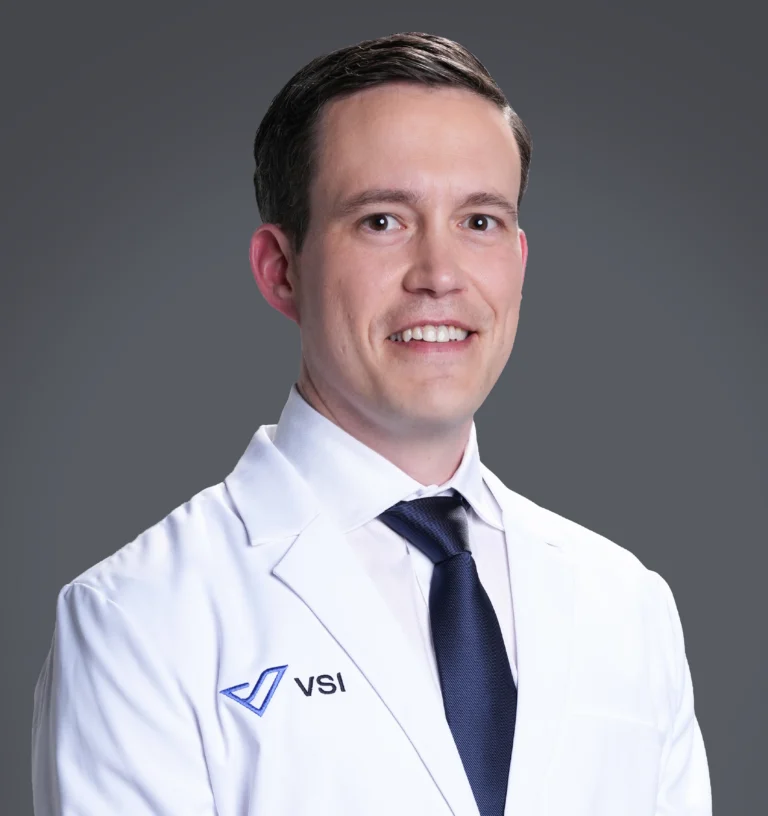
Dr. Upfill-Brown came to medicine after time South Africa caring for patients and extensive work in global health research before medical school. He chose spine because it had the hardest and most rewarding problems to solve.
He chose VSI after his first morning conference, where physical therapists, non-surgical providers, surgeons, and physician assistants discussed their patients together. “I don’t think there’s another practice like it,” His philosophy: treat every patient like a close family member, because “this is someone’s most important person in the world.”
I don’t think there’s another practice like it.
Dr. upfill-brown, on why he joined VSI
Frequently Asked Questions
Should I get a second opinion before spine surgery?
Yes, for any planned, non-emergency surgery. Bring your imaging, your reports, and a written list of symptoms and questions so the second or third surgeon can make an independent assessment.
What’s the difference between spinal fusion and motion preservation?
Fusion joins two or more vertebrae so that segment no longer moves. Motion preservation procedures, such as artificial disc replacement, are designed to keep movement at the treated level. Your anatomy and condition determine which is appropriate.
Can I get a second opinion at VSI if I live far away?
Yes. Patients travel to VSI from across the country and around the world – learn more about destination medicine at VSI. The practice is outside Washington, D.C., just minutes from the Dulles International Airport.
Find the Right Answer for Your Spine
If you’ve heard conflicting recommendations, or been told fusion is your only option, another conversation could change what you know about your choices. VSI has helped more than 100,000 patients across three decades. Meet the VSI spine surgeons or schedule a consultation.
Topics covered
About the Author
Featured Resources
Insights to Achieve a Pain-Free Life